

115.2K
Downloads
246
Episodes
In Common explores the connections between humans, their environment and each other through stories told by scholars and practitioners. In-depth interviews and methods webinars explore interdisciplinary and transdisciplinary work on commons governance, conservation and development, social-ecological resilience, and sustainability.
Episodes
Aug 9, 2022
Aug 9, 2022
56 min
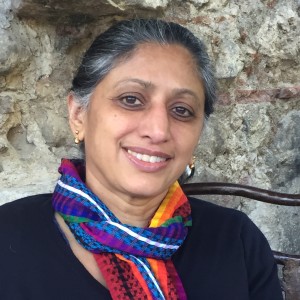
In this episode Michael speaks with Priya Shyamsundar, lead economist at the Nature Conservancy. Priya speaks about her career trajectory that led her to the Nature Conservancy, and about her current position. They discuss the history of economics and social science at the Nature Conservancy and in Conservation more broadly, and Priya describes the increasing appreciation for the role that humans play in conservation that has occurred across many conservation organizations, but also that there remains a dominance of natural sciences simply in terms of how many natural scientists vs. social scientists are employed at the Nature Conservancy.
Michael and Priya also talk about a specific project that Priya has been involved in called the Prana (“breath”) project, dealing with agricultural residue management in rural India. There, the massive burning of residues after harvest each fall has created large-scale smoke and air pollution problems. Priya, along with a previous guest of the podcast, JT Erbaugh, have been working with local partners in India to conduct focus groups and a baseline survey to understand the preferences of local farmers for how best to address this issue. The interview concludes with a discussion of the factors that make it more or less likely for farmers to adopt new farming strategies, and Priya mentions a finding that the most significant factor in affecting whether or not a farmer adopts a new technique is whether people in their social network have adopted it as well. Just like many social behaviors, adoption can be contagious.
References:
Cool green science website that Priya mentions: https://blog.nature.org/science/

Aug 1, 2022
Aug 1, 2022
1 hr 11 min
In this episode, Michael and Hita speak with David Bollier. David is an author, activist, blogger and consultant who spends a lot of time exploring the commons as a new paradigm of economics, politics and culture. In 2010, David co-founded the Commons Strategies Group, a consulting project that works to promote the commons internationally. More recently, he became the Director of the Reinventing the Commons Program at the Schumacher Center for a New Economics, based in Great Barrington, Massachusetts.
David has authored and co-authored many books, and we focus in particular on his book Free, Fair, and Alive: the Insurgent Power of the Commons, which he co-autherd with the late Silka Helfrich. Much of this book and our conversation focus on the idea of commoning. This is a different take on the commons, think about it less as a physical description of the environment and more about the relationships that we have with each other and the environment. It is also seen as a response to historic enclosures of the commons and a western emphasis on governance and property as inherently exclusionary practices. This approach is an important alternative to the dominant way in which the commons are thought about.
David’s website: http://www.bollier.org/
References:
Bollier, D., and S. Helfrich. 2019. Free, Fair, and Alive: The Insurgent Power of the Commons. New Society Publishers.

Jul 25, 2022
Jul 25, 2022
57 min
This is our 100th (full) episode! To celebrate, a group of us from the In Common team got together to do some reflecting, with each participant responding to the same prompt. This asked us to discuss how we got involved in the podcast, some inspiring and challenging moments, something that we're looking forward to doing more of with the podcast in the future, and as an aside, to talk about a recent book we have been reading.
Enjoy and thanks for listening!
References:
Elliott, A. 2021. Invisible Child: Poverty, Survival & Hope in an American City (Pulitzer Prize Winner). Random House Publishing Group.
Eriksen, S. H. 2022. Is my vulnerability so different from yours? A call for compassionate climate change research. Progress in human geography.
Ghosh, A. 2019. Gun Island: A Novel. Farrar, Straus and Giroux.
Nagendra, H. 2022. The Bangalore Detectives Club (The Bangalore Detectives Club Series). Constable.
Rao, K. 2021. Lady Doctors: The Untold Stories of India’s First Women in Medicine. Westland Publications Private Limited.
Tolle, E. 2006. A New Earth: Awakening to Your Life’s Purpose. Penguin Publishing Group.
Vaughan, M. B. 2018. Kaiaulu: Gathering Tides. Oregon State University Press.
Vidal, G. 2011. Burr: A Novel. Knopf Doubleday Publishing Group.
Jul 18, 2022
Jul 18, 2022
38 min
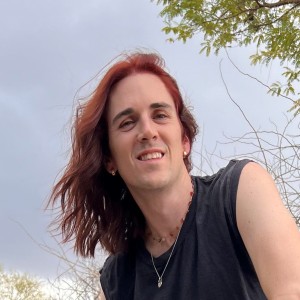
In this episode, Sivee Chawla speaks with Dane Whittaker about their research published in the International Journal of the Commons. They have authored the paper “Social-Ecological Institutional Fit in the volunteer Based organization: A study of the lake management organizations in Vilas County, Wisconsin, USA” with Alise Crippen, Corinne Johnson, and Marco A. Janssen.
The episode starts with Dane’s journey towards commons research. It continues with a conversation about the paper which focuses on volunteer based organizations as commons users and the theory of social-ecological fit in the context of Wisconsin lake social-ecological systems.
Dane is a PhD student at School of Sustainability, Arizona State University, USA. They study polycentric environmental governance of lakes in the Midwestern United States, and look forward to expanding their research to consider the role of power in shaping polycentric governance processes and outcomes in their dissertation. Dane is also actively involved with the IASC Early Career Network.
To learn more about Dane, see the following links:
https://sustainability-innovation.asu.edu/person/dane-whittaker/

Jul 15, 2022
Jul 15, 2022
8 min
This insight episode comes from full episode sixty-eight, Stefan and Courtney's conversation with Kimberley Peters.
Kimberley is a Professor of Marine Governance at the Helmholtz Institute for Functional Marine Biodiversity (HIFMB), a research organization in collaboration with the Alfred Wegener Institute (AWI) and University of Oldenburg (UOL), in Germany.
Kimberley talks with Courtney and Stefan about the need for a separate understanding of ocean geography as compared to land geography, and how that in turn leads to an evolving framework of ocean governance.
Kimberley's Website: https://kimberleypeters.com
In Common Website: https://www.incommonpodcast.org
Connect with us on Twitter: https://twitter.com/InCommonPod
Support us on Patreon: https://www.patreon.com/incommonpodcast
Jul 11, 2022
Jul 11, 2022
1 hr 25 min
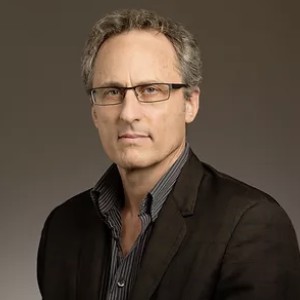
In this episode, Michael speaks with Jesse Ribot, Professor at the School of International Service at American University. Jesse is a human geographer who studies environmental justice and rural wellbeing. They discuss several aspects of Jesse’s research, including his foundational work on the theory of access, which he developed with Nancy Peluso. This theory broadens the traditional framing of environmental property rights to consider a broad suite of social factors, such as market access and access to technology and capital, that enable or limit access to the environment and the benefits that come with this access.
Michael and Jesse also talk about Jesse’s contributions to understanding climate change and climate risk. Here Jesse and his co-authors question the apolitical attribution of climate risk solely to the most proximate physical events such as hurricanes. Echoing Amartya Sen’s work on famine and entitlements, Jesse argues that this framing avoids the underlying dynamics of inequality that lead some to be more vulnerable to such events than others. This work continues a thread in Jesse’s research of unpacking concepts that have taken on a veneer of technicality, and reminding us that we cannot avoid asking about social inequality and the politics involved in addressing the underlying drivers of our environmental problems.
Jesse’s website: https://www.jesseribot.com/
References:
Giridharadas, A. 2018. Winners take all: the elite charade of changing the world. Alfred A. Knopf.
Kashwan, P., and J. Ribot. 2021. Violent silence: the erasure of history and justice in global climate policy. Current history 120(829):326–331.
Lahsen, M., and J. Ribot. 2022. Politics of attributing extreme events and disasters to climate change. Wiley interdisciplinary reviews. Climate change 13(1).
Peluso, N. L., and J. Ribot. 2020. Postscript: A Theory of Access Revisited. Society & natural resources 33(2):300–306.
Ribot, J. C. 1998. Theorizing access: Forest profits along Senegal’s charcoal commodity chain. Development and change 29(2):307–341.
Ribot, J. C., and N. L. Peluso. 2009. A theory of access. Rural sociology 68(2):153–181.
Hidden Brain podcast interview with Eitan Hersh that Michael mentions: https://hiddenbrain.org/podcast/passion-isnt-enough/

Jul 4, 2022
Jul 4, 2022
1 hr 4 min
In this episode, Hita and Michael speak with Arati Kumar Rao who describes herself as a chronicler of landscapes - of both biodiversity as well as livelihoods using all the storytelling tools she has at her disposal - from photographs to writing to sketching. She is based out of Bengaluru, India. We speak about her enduring love for literature, writing, photography, and drawing and how that love translated into the work she does today. We talk of some of the stories from her experiences of chronicling landscape change across India and elsewhere that have stayed with her, and given her a sense of hope or despair as she navigates her own personal identity against those of the people she talks about. We speak of a particular historically practised form of rainwater harvesting in the deep Thar desert - the Khadeen - that is over 700 years old, and is intimately connected to agrarian practices in the region. We discuss the need to break down silos that exist across different disciplines or practice and to speak both to and across the social as well as the scientific stories of a landscape and how they need to be inclusive of the people that live and experience those stories in their daily lives. We speak about feeling the land with all of one’s senses and how that is different from zooming across it in a vehicle, linking those ideas to the privilege that comes from being an ‘other’ who studies people and livelihoods with the freedom of leaving that landscape and going back to the privilege we came from. Yet with the notion that we are not separate from what’s happening around us. We end with a discussion on the multilayered and deep rooted patriarchy that a woman encounters when leading a traveller’s lifestyle, both from within the communities she engages with, as well as the community she comes back to.
Arati’s website: https://www.aratikumarrao.com/about
In Arati’s own words, here is the story of the Khadeen: https://www.peepli.org/stories/miracle-of-sky-river/
She is also to found documenting stories of change on her Instagram handle: @aratikumarrao
Jun 27, 2022
Jun 27, 2022
1 hr 39 min
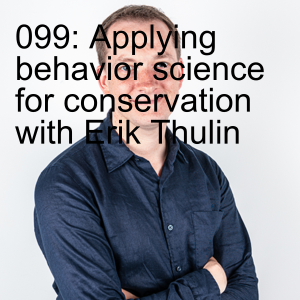
In this episode, Michael speaks with Erik Thulin, Behavioral Science Director at Rare, an NGO dedicated to employing behavioral and social change for the benefit of the environment. Erik was a previous guest on this podcast during one of our episodes associated with a virtual conference of the international association for the study of the commons.
Erik talks to Michael about his role at Rare and several topics related to it. These included the relationship between applied conservation work and behavioral science and research in academia, the role and challenges of behaviorally-oriented policy panaceas, Erik's own findings on the importance of social influence in directing behavior, and the role that emotions play in behavior change.
Note: Erik mentions a program called “Make It Personal”. Since recording that program changed its name to Climate Culture.
Erik’s website: https://rare.org/person/erik-thulin/
References:
Brown, P. C., H. L. Roediger, and M. A. McDaniel. 2014. Make It Stick. Harvard University Press.
Heller, K., M. Berger, A. Gagern, A. Rakhimov, J. Thomas, and E. Thulin. 2021. Six behaviors policymakers should promote to mitigate climate change. Behavioral science & policy 7(2):63–73.
Henrich, J., R. Boyd, S. Bowles, C. Camerer, E. Fehr, H. Gintis, and R. McElreath. 2001. In Search of Homo Economicus: Behavioral Experiments in 15 Small-Scale Societies. The American economic review 91(2):73–78.
Henrich, J. 2015. The secret of our success: how culture is driving human evolution, domesticating our species, and making us smarter. Princeton University Press, Princeton, N.J.
Henrich, J. 2020. The WEIRDest People in the World: How the West Became Psychologically Peculiar and Particularly Prosperous. Farrar, Straus and Giroux.
Rakhimov, A., and E. Thulin. 2020, December. Knowing Behavior Matters Doesn’t Hurt: The Effect of Individual Climate Behavior Messaging on Green Policy Support. https://psyarxiv.com/hu24g/
Richerson, P. J., R. Boyd, and B. Paciotti. 2002. An evolutionary theory of commons management. Pages 403–442 in Elinor Ostrom, Thomas Dietz, Nives Dolšak, Paul C. Stern, Susan Stonich, Elke U. Weber, editors. The drama of the commons. The National Academies Press.
Thaler, R. H., and C. R. Sunstein. 2009. Nudge: Improving Decisions about Health, Wealth, and Happiness. Penguin.
Thulin, E., and A. Rakhimov. 2019, November. Helping the Climate Because Others Do: An Exploratory Analysis of the Psychological Predictors of Intention to Perform High Impact Pro-Environmental Behaviors. https://psyarxiv.com/kah7s/
Williamson, K., and E. Thulin. 2021. Leveraging emotion-behavior pathways to support environmental behavior change. https://psyarxiv.com/wtms9/
Thulin, E. 2020. Cooperative Behavior Adoption Guide: Applying Behavior-Centered Design to Solve Cooperative Dilemmas. Arlington, VA: Rare.

Jun 24, 2022
Jun 24, 2022
12 min
This insight episode comes from full episode sixty, Stefan's conversation with Emily Boyd.
Emily is the Director of Lund University Centre for Sustainability Studies and Professor in Sustainability Science, as well as a leading social scientist with a background in international development, environment, and climate change.
Stefan and Emily talk about the benefits and challenges of an interdisciplinary education and approach to sustainability issues, specifically how to communicate and work with people from different fields, as well as how universities can work to support interdisciplinary training.
Emily Boyd is also an author for the IPCC, IPBES, and UKCCRA and is an Earth System Governance Senior Fellow.
https://www.lucsus.lu.se/emily-boyd
https://scholar.google.de/citations?user=CatOY9oAAAAJ&hl=de&oi=ao
In Common Website: https://www.incommonpodcast.org
Connect with us on Twitter: https://twitter.com/InCommonPod
Support us on Patreon: https://www.patreon.com/incommonpodcast
Jun 13, 2022
Jun 13, 2022
1 hr 27 min
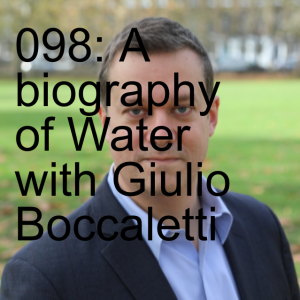
In this episode, Dustin and Hita speak with Giulio Boccaletti, a writer, entrepreneur and honorary research associate at the Smith School of Enterprise and the Environment at the University of Oxford. They discuss Giulio’s recent book, Water: a Biography, which he started writing during his former role as Chief Strategy Officer at The Nature Conservancy. In the book, Giulio traces the relationship between water and humanity from ancient civilizations and the Roman empire to the American West and China. He argues that the rise of the modern republic is linked to the central role water had in society, and he calls for a new era of constitutional reform that accounts for environmental and climate change. They discuss the political and institutional theory at the heart of the book, and several of its arguments and case studies, highlighted by the Tennessee Valley Authority. They conclude with brief reflections from Giulio on conservation strategy and practice, and the challenges of legitimacy in community-based conservation initiatives.