
115.2K
Downloads
246
Episodes
In Common explores the connections between humans, their environment and each other through stories told by scholars and practitioners. In-depth interviews and methods webinars explore interdisciplinary and transdisciplinary work on commons governance, conservation and development, social-ecological resilience, and sustainability.
Episodes
May 30, 2022
May 30, 2022
1 hr 11 min
In this episode, Divya speaks with Dr. Ghazala Shahabuddin. Ghazala is an ecologist based in India, where she currently teaches at the Ashoka University and is also working on multiple projects focusing on the ecological and institutional aspects of decentralized forest management, conservation, wildlife policy and politics, and community-based ecotourism.
They talk about Ghazala’s important work on conservation-induced displacement in India, which she has written extensively about in several books and articles (links below), particularly her books: Conservation at the Crossroads: Science, Society and the Future of India’s Wildlife and Making Conservation Work (co-edited with Dr. Mahesh Rangarajan). They also discuss Ghazala’s ongoing work on the impacts of land-use change on natural ecosystems and community-based ecotourism in the mid-Himalayan region of India. Ghazala's work although diverse, we see that the common themes cutting across her work are the role of science in informing human dimensions of environment and policy, local people and histories in conservation, and the role of context-specific studies in informing global discourses on climate change and development.
More information on Ghazala’s work: https://www.researchgate.net/profile/Ghazala-Shahabuddin
References:
Shahabuddin, G. (2010). Conservation at the crossroads: science, society, and the future of India's wildlife. New India Foundation.
Shahabuddin, G., & Rangarajan, M. (Eds.). (2007). Making conservation work: Securing biodiversity in this new century. Permanent Black.
Shahabuddin, G., Goswami, R., & Gupta, M. (2017). An annotated checklist of the birds of banj oak–chir pine forests in Kumaon, Uttarakhand. Indian Birds, 13(2), 29-36.
Shahabuddin, G., Goswami, R., Krishnadas, M., & Menon, T. (2021). Decline in forest bird species and guilds due to land use change in the Western Himalaya. Global Ecology and Conservation, 25, e01447.
Shahabuddin, G. (2021). Lived in the lived landscape: A decade of insights. Sanctuary Asia, 41(10).

May 23, 2022
May 23, 2022
1 hr 46 min
In this episode Hita and Michael spoke with Dustin Garrick who is an Associate Professor at the School of Environment, Resources, and Sustainability at the University of Waterloo, Canada and a research fellow at Green Templeton College, University of Oxford. We discussed how his passion for rivers led Dustin to move between theory and practice to understand the scope - and limits - of water markets as part of struggles toward more sustainable water management. Starting in the Colorado and Columbia Rivers of North America, Dustin’s work has led to a broader intellectual project to examine the institutional diversity and evolution of water markets, working with a network of partners across the world, to understand whether and under which conditions, different resource users and communities can “use markets without being abused by them”. We also spoke about the critiques of some predominant market based approaches to natural resource governance such as cap-and-trade systems and more free market environmentalism. . We touched upon some of his more recent work on informal water markets, and his growing interest in collective action across the rural-urban divide, which led to the development of a global database on rural-urban water conflict and cooperation that he has developed along with some of his colleagues. Dustin also reflected upon his engagement with large international development organisations such as the World Bank, OECD and global conservation organisations. He stressed that these organisations are not monolithic entities. t They are composed of groups of people with varied perspectives, interests and expertise, including many who share a focus on political economy and informality. Yet, these organisations also face practical and political constraints, that can lead to panacea thinking and otherwise limit the range of institutions and interests considered. We ended with a note on the importance of developing and diversifying one’s mentoring networks, while forging our own academic and non-academic pathways and trajectories. Dustin is currently involved in a book project on “Uncommon Markets”, the details of which may be found here: https://www.aaas.org/news/aaas-leshner-fellow-dustin-garrick-launches-uncommon-markets-book-project
Dustin’s institutional website: https://uwaterloo.ca/environment-resources-and-sustainability/people-profiles/dustin-garrick
Some of the references we discuss in this interview are listed below:
- Neuman, Janet C., The Good, the Bad, the Ugly: The First Ten Years of the Oregon Water Trust. Nebraska Law Review, Vol. 83, pp. 432-484, 2004, Available at SSRN: https://ssrn.com/abstract=985401
- Garrick, D. E. (2015). Water allocation in rivers under pressure: Water trading, transaction costs and transboundary governance in the Western US and Australia. Edward Elgar Publishing.
- Garrick, D., O’Donnell, E., Damania, R., Moore, S., Brozović, N., Iseman, T. 2019. Informal water markets in an urbanising world: some unanswered questions. © World Bank.
- Garrick, Dustin, Lucia De Stefano, Laura Turley, Isabel Jorgensen, Ismael Aguilar-Barajas, Barbara Schreiner, Renata de Souza Leão, Erin O’Donnell, and Avril Horne. 2019. “Dividing the Water, Sharing the Benefits: Lessons from Rural-to-Urban Water Reallocation.” World Bank, Washington, DC.
- Williamson, E.O. 1981 “The Economics of Organization: The Transaction Cost Approach.” American Journal of Sociology 87( 3): 548–77. http://www.jstor.org/stable/2778934.
- Marshall, G.R. 2005. Economics for Collaborative Environmental Management: Renegotiating the Commons. London: Earthscan Publications.
- Ostrom, E. 2009. Understanding institutional diversity. In Understanding Institutional Diversity. Princeton university press.
- North, D.C., 1991. Institutions, ideology, and economic performance. Cato Journal, 11: 477.
- Ostrom, E.E., Dietz, T.E., Dolšak, N.E., Stern, P.C., Stonich, S.E. and Weber, E.U., 2002. The drama of the commons. National Academy Press.
- Scott, J.C., 2008. Seeing like a state. In Seeing Like a State. Yale University Press.
May 16, 2022
May 16, 2022
1 hr 29 min
In this episode, Michael speaks with Mike Albertus, associate professor of Political Science at the University of Chicago. They talk about Mike’s most recent book, Property Without Rights: Origins and Consequences of the Property Rights Gap. In the book, Mike is studying the results of agrarian reforms in Latin America, which are designed to redistribute land to rural peasants. Many of these reforms have left a “gap”, or a lack of formalization, defensibility, and alienability of these new rural land rights. Mike’s main thesis of the book is that this gap has persisted in large part because of strategic decisions by national governments to keep rural landowners dependent on the state for their livelihood. Mike and Michael discuss this thesis as well as several other related arguments in the book.
Mikes website: http://www.michaelalbertus.com/
References:
Albertus, M. 2021. Property without Rights: Origins and Consequences of the Property Rights Gap. Cambridge University Press.
May 13, 2022
May 13, 2022
11 min
This insight episode comes from full episode sixty-two, Michael and Stefan's conversation with Henrik Österblom.
Henrik is the Science Director of the Stockholm Resilience Center and a Professor at the University of Stockholm in Sweden.
In this episode, Henrik talks with Michael and Stefan about his piece in One Earth, “Unsustainable Science,” which thinks about the idea that being busy is equivalent to doing well. The three look at the pressure produced by the treadmill of papers and funding in academia, and discuss how more productive and sustainable solutions can be created through slowing down and talking with one another, rather than competing for the same end goals.
Henrik's SRC page: https://www.stockholmresilience.org/meet-our-team/staff/2008-01-09-osterblom.html
Unsustainable Science: https://www.cell.com/one-earth/fulltext/S2590-3322%2819%2930017-X?_returnURL=https%3A%2F%2Flinkinghub.elsevier.com%2Fretrieve%2Fpii%2FS259033221930017X%3Fshowall%3Dtrue
In Common Website: https://www.incommonpodcast.org
Connect with us on Twitter: https://twitter.com/InCommonPod
Support us on Patreon: https://www.patreon.com/incommonpodcast

May 9, 2022
May 9, 2022
1 hr 46 min
This is the first episode of a new series of the podcast that we are calling "Science and Practice". In this series we will be interviewing guests who conduct applied work on environmental governance and conservation and who often act at the interface of such work and the scientific study of these topics.
In this episode, Michael talks with Nathan Bennett, an Independent Consultant who has worked with several national and international organizations including the Nature Conservancy, Parks Canada, Environment Canada, Comunidad y Biodiversidad in Mexico, and the Smithsonian Institute. Nathan is also the Chair of the People and the Oceans Specialist Group for the International Union for the Conservation of Nature (IUCN). During their conversation, Michael asks Nathan about his role in bridging academic and practice-based work and the role that policy panaceas can play in each of these spaces. In his response, Nathan describes a more diagnostic approach that considers the relative costs and benefits of different types of marine policies as an important alternative to panacea thinking. They conclude the conversation by talking about Nathan's work on the role of social science in conservation and the challenges and promise of doing interdisciplinary work for conservation.
Nathan's website: https://nathanbennett.ca/
References:
Bennett, N. J., R. Roth, S. C. Klain, K. Chan, P. Christie, D. A. Clark, G. Cullman, D. Curran, T. J. Durbin, G. Epstein, A. Greenberg, M. P. Nelson, J. Sandlos, R. Stedman, T. L. Teel, R. Thomas, D. Veríssimo, and C. Wyborn. 2017. Conservation social science: Understanding and integrating human dimensions to improve conservation. Biological conservation 205:93–108.
Bennett, N. J., T. S. Whitty, E. Finkbeiner, J. Pittman, H. Bassett, S. Gelcich, and E. H. Allison. 2018. Environmental Stewardship: A Conceptual Review and Analytical Framework. Environmental management 61(4):597–614.
Bennett, N. J., A. Calò, A. Di Franco, F. Niccolini, D. Marzo, I. Domina, C. Dimitriadis, F. Sobrado, M.-C. Santoni, E. Charbonnel, M. Trujillo, J. Garcia-Charton, L. Seddiki, V. Cappanera, J. Grbin, L. Kastelic, M. Milazzo, and P. Guidetti. 2020. Social equity and marine protected areas: Perceptions of small-scale fishermen in the Mediterranean Sea. Biological conservation 244:108531.

May 2, 2022
May 2, 2022
9 min
This insight episode comes from full episode 059, Michael's conversation with Brent Loken.
Brent is a Global Food Lead Scientist at the World Wildlife Fund.
In this episode, Brent talks with Michael about the importance of understanding how the conversion of land to agricultural-based uses and the other major environmental impacts of large-scale agriculture are intimately related to our ability to attain animal conservation and other environmental goals, as well as differing ideas of how best to use land and the politics surrounding these issues.
Brent's Information:
Website: https://www.worldwildlife.org/experts/brent-loken
Twitter: @brentloken
Email: brent.loken@wwf.org
In Common website: https://www.incommonpodcast.org
Connect with us on Twitter: https://twitter.com/InCommonPod
Support us on Patreon: https://www.patreon.com/incommonpodcast
Apr 25, 2022
Apr 25, 2022
1 hr 21 min
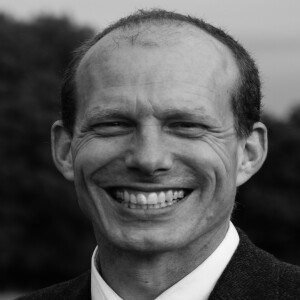
In this episode, Michael and Stefan speak with Dan Brockington, Professor and director of the Sheffield Institute for International Development at the University of Sheffield. They talk to Dan about his important work on protected areas, and in particular two books he has written on the subject: Fortress Conservation: The Preservation of the Mkomazi Game Reserve, Tanzania, and Nature Unbound: Conservation, Capitalism and the Future of Protected Areas. They discuss the distinction between reality and (sometimes true) myths that help to sustain nature reserves through their representation, and help to provide “brand value” for conservation. Relatedly, they discussed the relationships between conservation, capitalism, and celebrity.
Dan’s website: https://danbrockington.com/
References:
Brockington, D. 2002. Fortress Conservation: The Preservation of the Mkomazi Game Reserve, Tanzania. Indiana University Press.
Brockington, D., Duffy, R., and Igoe, J. 2008. Nature Unbound: Conservation, Capitalism and the Future of Protected Areas. Routledge.
Brockington, D. 2009. Celebrity and the Environment: Fame, Wealth and Power in Conservation. Bloomsbury Publishing.
Apr 18, 2022
Apr 18, 2022
1 hr 13 min
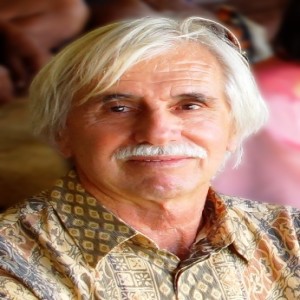
In this episode, Michael speaks with one of his intellectual heroes, Dr. Steve Lansing. Steve is an external professor at the Santa Fe Institute and the Vienna Complexity Hub, an emeritus professor of anthropology at the University of Arizona, and a senior research fellow at the Stockholm Resilience Centre.
Steve and Michael talk about Steve’s work with the Balinese Subak irrigation communities, including his understanding of their water use and management practices that are mediated by their water-based religion. Steve also describes the effects that green revolution techniques and technologies had on the Subaks, how local actors responded to this disturbances to their traditions, and what role Steve himself played in these responses. Finally, Steve talks about his more recent work in Bali, which includes an experiment to examine whether the Subak farmers can save water by flooding their paddies less, and thereby reduce methane emissions while also producing more rice.
Steve’s website: http://www.slansing.org/
References:
Lansing, J. S. 2012. Perfect order: Recognizing complexity in Bali. Princeton University Press.
Lansing, S. 1991. Priests and Programmers: Technologies of Power in the Engineered Landscape of Bali. Princeton University Press.
Lansing, J. S., N. N. Chung, L. Y. Chew, and G. S. Jacobs. 2021. Averting evolutionary suicide from the tragedy of the commons. International journal of the commons 15(1):414.

Apr 15, 2022
Apr 15, 2022
14 min
This insight episode comes from full episode 052, Michael and Stefan's conversation with Jessica Gephart.
Jessica is an Assistant Professor of Environmental Science at American University. Her research focuses on feedbacks between globalized food systems and the environment.
In this episode, Jessica talks with Michael and Stefan about how the different ways that seafood catch and commodities are reported leads to discrepancies in trade data numbers, and the complexity of untangling the different trade pathways to get a clearer picture of global seafood trade.
Jessica's website: http://www.jessicagephart.com
In Common website: https://www.incommonpodcast.org
Connect with us on Twitter: https://twitter.com/InCommonPod
Support us on Patreon: https://www.patreon.com/incommonpodcast

Apr 11, 2022
Apr 11, 2022
1 hr 29 min
In this episode, Michael speaks with Kaitlin Cordes, an international lawyer and researcher who focuses on human rights and sustainable development. Most recently, Kaitlin spent eight years developing and leading the Columbia Center on Sustainable Investment's work on land, agriculture, food systems, and human rights. Prior to that, she worked at Human Rights Watch and as an Advisor to the UN Special Rapporteur on the right to food. Kaitlin and Michael talk about Kaitlin’s work at the Center on Sustainable Investment, which included projects focused on land tenure and human rights as well as coffee commodity chains. The conversation concludes with a discussion about Kaitlin’s latest project, 31 days of climate action. This is a project focused on the personal, incremental, and intentional ways that each of us can confront the challenge of climate change and the psychological toll that it can take on us.
Websites:
Kaitlin’s website: https://www.kaitlincordes.com/
31 days of climate action: https://www.31daysofclimateaction.com/
Apps that Kaitlin mentions:
Climate Action Now
Earth Hero
References:
Giridharadas, A. 2018. Winners take all: the elite charade of changing the world. Alfred A. Knopf.
Lewis, M. 2014. Flash Boys: A Wall Street Revolt. W. W. Norton & Company.
Nicholas, K. 2021. Under the sky we make: How to be human in a warming world. GP Putnam’s Sons.
Thaler, R. H., and C. R. Sunstein. 2009. Nudge: Improving Decisions about Health, Wealth, and Happiness. Penguin.