
115.3K
Downloads
246
Episodes
In Common explores the connections between humans, their environment and each other through stories told by scholars and practitioners. In-depth interviews and methods webinars explore interdisciplinary and transdisciplinary work on commons governance, conservation and development, social-ecological resilience, and sustainability.
Episodes
Apr 4, 2022
Apr 4, 2022
1 hr 7 min
In this episode, Michael speaks with Jean Wiener, the founder and director of the Foundation for the Protection of Marine Biodiversity, or FOPROBIM. Jean and his organization have worked for decades on marine conservation in Haiti, where Jean has played a critical role in helping to establish a group of marine protected areas. In 2015, Jean was awarded the Goldman Environmental prize in recognition for his work. Jean talks with Michael about his career path and his work to develop marine conservation in Haiti, both formally and from the bottom up. They discuss the challenges that Jean has confronted and continues to deal with under often difficult social and political conditions, and what he hopes for in the future.
FOPROBIM website: https://www.foprobim.org/
Link to Jean’s Goldman prize award: https://www.goldmanprize.org/recipient/jean-wiener/
Video about Jean’s work: https://www.youtube.com/watch?v=BFSGdGvpQ4U

Apr 1, 2022
Apr 1, 2022
31 min
In this IJC episode, Frank van Laerhoven has a conversation with Jim Sinner.
Together with Marc Tadaki, Edward Challies, Margaret Kilvington, Paratene Tane, and Christina Robb, Jim co-authored a recent IJC publication entitled Crafting Collective Management Institutions in Messy Real-World Settings: A Call for Action Research.
The article deals with how we can give guidance to prospective, or would-be institutional crafters and collective management enablers. And in order to address that question the researchers apply an explicit action research approach with commoners not as subjects or respondents but as co-researchers.
In the conversation we discuss some of the codes of conduct for commons researchers that are based on Jim’s research, such the need to get alongside people on the ground, to engage with social identities, and to put social justice at the center of what we do.
Jim’s work aligns with other work that we have published in the International Journal of the Commons, work that engages with critical institutionalism, for example. If this topic interests you, you may want to check out the following titles, also:
- Cleaver, F., & De Koning, J. (2015). Furthering critical institutionalism. International Journal of the Commons, 9(1).
- Funder, M., & Marani, M. (2015). Local bureaucrats as bricoleurs. The everyday implementation practices of county environment officers in rural Kenya. International Journal of the Commons, 9(1).
- Ingram, V., Ros-Tonen, M., & Dietz, T. (2015). A fine mess: Bricolaged forest governance in Cameroon. International Journal of the Commons, 9(1).
- Jones, S. (2015). Bridging political economy analysis and critical institutionalism: an approach to help analyse institutional change for rural water services. International Journal of the Commons, 9(1).
- Marin, A., & Bjørklund, I. (2015). A tragedy of errors? Institutional dynamics and land tenure in Finnmark, Norway. International Journal of the Commons, 9(1).
- Saunders, F. (2014). The promise of common pool resource theory and the reality of commons projects. International Journal of the Commons, 8(2).
- Van der Kooij, S., Zwarteveen, M., & Kuper, M. (2015). The material of the social: the mutual shaping of institutions by irrigation technology and society in Seguia Khrichfa, Morocco. International Journal of the Commons, 9(1).
- Verzijl, A., & Dominguez, C. (2015). The powers of water-user associations: on multiplicity, fluidity, and durability in the Peruvian Andes. International Journal of the Commons, 9(1).
Mar 30, 2022
Mar 30, 2022
17 min
This insight episode comes from full episode 051, Michael's conversation with Beatriz Dos Santos Dias.
Beatriz is a Postdoctoral Fellow at the College of Fisheries and Ocean Sciences at the University of Alaska Fairbanks. Beatriz was part of the Modelling and Stock Assessment of Prince William Sound Herring in the Gulf of Alaska, and she is currently exploring the effects of regime shifts in the Gulf of Alaska Marine food webs.
In this episode, Beatriz talks with Michael about models, specifically their value in informing policy, and the importance of a historical perspective in ecological research.
Beatriz's website: https://www.biadias.com/home
In Common website: https://www.incommonpodcast.org
Connect with us on Twitter: https://twitter.com/InCommonPod
Support us on Patreon: https://www.patreon.com/incommonpodcast

Mar 23, 2022
Mar 23, 2022
57 min
In this episode, Hita spoke with Aditya Ramesh, Presidential Fellow of Environmental History at the University of Manchester in the United Kingdom. They spoke about disease ecologies, the epistemes of disease, and its links with urban planning. In the process they also discussed the changing ideas of what constitutes an archive and what that means for upcoming scholars who engage with environmental history.
Aditya’s website: https://www.research.manchester.ac.uk/portal/aditya.ramesh.html
Mar 14, 2022
Mar 14, 2022
1 hr 10 min
In this episode Michael speaks with Dr. Noa Kekuewa Lincoln, a professor in the department of tropical plant and soil sciences at the University of Hawaii at Manoa. Noa’s specialty areas include biogeochemistry, ethnography, and archaeology of traditional farming methods. Noa tells Michael about his work on Hawaiian farming systems and the Hawaiian concept of Kuleana as a combination of both a right to and respect for the environment. Noa also talks about the intrinsic power of stories and the importance of interdisciplinary work in enabling us to tell compelling stories about our relationship with the environment.
References and resource:
Another interview with Noa on Science Friday: https://www.sciencefriday.com/person/noa-kekuewa-lincoln/
Lincoln, N. K., Rossen, J., Vitousek, P., Kahoonei, J., Shapiro, D., Kalawe, K., Pai, M., Marshall, K., & Meheula, K. (2018). Restoration of ‘Āina Malo‘o on Hawai‘i Island: Expanding Biocultural Relationships. Sustainability: Science Practice and Policy, 10(11), 3985. https://doi.org/10.3390/su10113985
Lincoln, N. K., & Ardoin, N. M. (2016). Cultivating values: environmental values and sense of place as correlates of sustainable agricultural practices. Agriculture and Human Values, 33(2), 389–401. https://doi.org/10.1007/s10460-015-9613-z
Mar 10, 2022
Mar 10, 2022
29 min
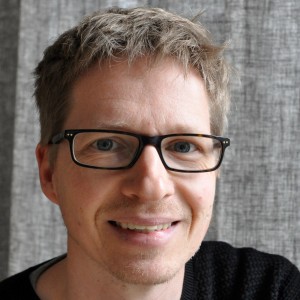
Frank van Laerhoven is speaking with Maurice Paulissen.
Is it a historian? Is it an ecologist? No, it is a landscape historian! Maurice is one of the many commons scholars that cannot be easily categorized by means of a disciplinary label. He is also an exponent of a long tradition within our domain of researchers for whom “going to the field” means “going to an archive” and that manage to reconstruct commons governance 500 or more years back.
Maurice co-authored an IJC publication entitled ‘Dire Necessity or Mere Opportunity? Recurrent Peat Commercialisation from Raised Bog Commons in the Early Modern Low Countries’ together with Roy van Beek, Serge Nekrassoff, Edward Huijbens, and Theo Spek.
The episode starts with an half-hearted attempt to pin down Maurice in terms of academic disciplines (an attempt that partly fails). It then continues with a reflection on the article that served as an excuse for the conversation. That article contests the simplistic notion that in early modern Europe, shared resource management solutions offered by markets or governments were not sufficiently reliable, and therefore fell into the lap of autonomous communities. It is convincingly shown that markets (both local and regional), governments (at various levels, in various forms) and more or less autonomous communities play competing and complementary roles in the governance of peat land – roles that vary over time and place. The conversation ends with a reflection on whether a study of commons governance 500 years ago can be useful for commoners, today.
For more analyses of historical commons, also check out the following IJC titles:
- Laborda-Pemán, M., & De Moor, T. (2016). History and the commons: a necessary conversation. International Journal of the Commons, 10(2).
- Farjam, M., De Moor, T., van Weeren, R., Forsman, A., Dehkordi, M. A. E., Ghorbani, A., & Bravo, G. (2020). Shared patterns in long-term dynamics of commons as institutions for collective action. International Journal of the Commons, 14(1).
- Takahashi, T., Matsushita, K., Yoshida, Y., & Senda, T. (2019). Impacts of 150 years of modernization policies on the management of common forests in Japan: a statistical analysis of micro census data. International Journal of the Commons, 13(2).
- Echegaray, E. P. (2011). Communities and sustainability in medieval and early modern Aragon, 1200-1600. International Journal of the Commons, 5(2).
- Chanda, S., Patnaik, A., & Chatterjee, S. C. (2021). The Courtesan Project and the Tawa’ifs’ Cultural Commons. International Journal of the Commons, 15(1).
- Castro, Á. C. (2021). Early Medieval Commons? Or How the History of Early Medieval Europe Could Benefit from a Necessary Conversation: The Case From NW Iberia. International Journal of the Commons, 15(1).
Mar 6, 2022
Mar 6, 2022
1 hr 5 min
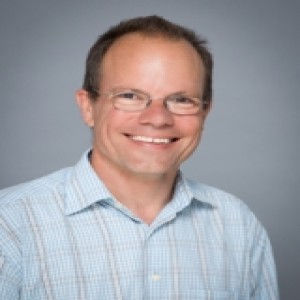
In this episode, Stefan interviews Achim Schlüter. Achim is a Professor of Social Systems & Ecological Economics at Jacobs University in Bremen, Germany. He is also the Social Science Department leader and head of the Institutional and Behavioral Economics working group at the Leibniz Center for Tropical Marine Research (ZMT). He has interests in processes of institutional development and change, privatization and what influences human behavior, where he has focused attention on coastal systems, specifically in Indonesia, Peru and Senegal, among others.
In the episode, Stefan and Achim discuss his career path focused on privatization processes and commons governance including his dual focus on behavioral experiments and qualitative institutional analysis. Later, collaboration challenges in science are explored, and challenges of doing research away from your home country.
Achim’s institutional webpage
https://www.leibniz-zmt.de/en/marine-tropics-research/who-we-are/achim-schlueter-en.html
Achim’s Google Scholar
https://scholar.google.de/citations?user=L5ONyegAAAAJ&hl=de
In Common webpage
https://www.incommonpodcast.org/
Mar 4, 2022
Mar 4, 2022
6 min
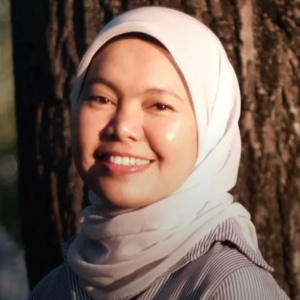
This insight episode is from full episode 048, Stefan's conversation with Irina Rafliana.
Irina is a science communication officer at the Indonesian Institute of Sciences (LIPI), and is also currently a PhD candidate at the German Development Institute in Bonn, Germany, where her research is focused on disaster sociology.
In this episode, Irina discusses the importance of language with Stefan in allowing for innovation and research to occur.
Indonesian Institute of Sciences (LIPI): http://lipi.go.id/
In Common website: https://www.incommonpodcast.org
Connect with us on Twitter: https://twitter.com/InCommonPod
Support us on Patreon: https://www.patreon.com/incommonpodcast
Feb 28, 2022
Feb 28, 2022
1 hr 6 min
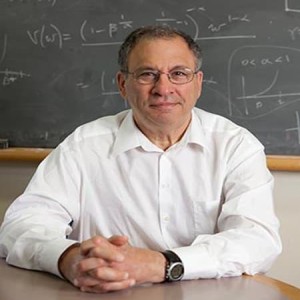
In this episode, Michael speaks with Simon Levin, professor of Ecology and Evolutionary Biology at Princeton University. Simon is a giant in the field of ecology, and in the last several decades his work has extended to the study of the social-ecological systems, cooperation, and the governance of the commons. His work in this area includes the book Fragile Dominion: Complexity and the Commons, which is a great introduction to Simon’s ideas on society and ecology for non-experts. Simon talks with Michael about his views on the commons as well as a range of topics including climate change, the COVID pandemic, biological and cultural evolution, and interdisciplinary collaboration.
Simon’s website: https://slevin.princeton.edu/
References:
Levin, S. 1999. Fragile Dominion: Complexity and the Commons. Perseus Books.
Feb 18, 2022
Feb 18, 2022
18 min
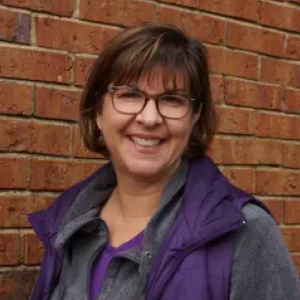
This insight episode is from full episode eight, Michael and Stefan's conversation with Helen Rozwadowski.
Helen is a professor of History and founder of the Maritime Studies program at the University of Connecticut, and has written multiple books on the history of the ocean.
In this episode, Helen discusses the idea of the ocean as a mirror, reflecting our personal biases and ideas back to us. She also discusses the importance of understanding the past in informing the present, and how history can influence current research.
Helen's website: https://history.uconn.edu/faculty-by-name/helen-m-rozwadowski/
In Common website: https://www.incommonpodcast.org
Connect with us on Twitter: https://twitter.com/InCommonPod
Support us on Patreon: https://www.patreon.com/incommonpodcast