
115.1K
Downloads
246
Episodes
In Common explores the connections between humans, their environment and each other through stories told by scholars and practitioners. In-depth interviews and methods webinars explore interdisciplinary and transdisciplinary work on commons governance, conservation and development, social-ecological resilience, and sustainability.
Episodes
Oct 10, 2022
Oct 10, 2022
34 min
Listen to a conversation that Frank van Laerhoven had with Valentina Fonseca Cepeda .
Together with Daniel Castillo-Brieva, Luis Baquero-Bernal, Luz Angela Rodríguez, Eliane Steiner, and John Garcia-Ulloa, Valentina co-authored a recent IJC publication entitled Magical Realism for Water Governance Under Power Asymmetries in the Aracataca River Basin, Colombia, an article on wetlands, water and conflict in the Ciénaga Grande de Santa Marta wetland complex in Colombia.
As many wetlands worldwide, this system is characterized by its high biodiversity and various livelihoods that are closely linked to water. Unfortunately, also as many wetlands worldwide, this system is vulnerable to and affected by many threats and conflict. Valentina and her colleagues unravel and examine this case employing a mix of methods that include a hydrological analysis, semi-structured interviews, and role-playing.
With a background in ecology, Valentina’s work focuses on local communities, more in particular the use of traditional ecological knowledge for the governance of natural resources. Valentina is affiliated with The Pontificia Universidad Javeriana in Colombia, teaching on the governance of socio-ecological systems, among other thing. At the same time, she works with the NGO ONF Andina where she helps designing and implementing participatory methods with institutional actors and community members to analyze ecosystem services and value chains with the purpose of co-creating alternative scenarios.
In case you want to learn more about topics akin to the topic discussed in this episode, we suggest you check out some of the other titles in the International Journal of the Commons that look at water, power and conflict:
- Chomba, M. J., Hill, T., Nkhata, B., & Nel, A. (2019). A social exchange analysis of adaptive governance in water allocation processes, the Kafue Flats, Zambia. International Journal of the Commons, 13(2).
- Leder, S., Sugden, F., Raut, M., Ray, D., & Saikia, P. (2019). Ambivalences of collective farming: Feminist political ecologies from the Eastern Gangetic Plains. International Journal of the Commons, 13(1).
- Olivier, T. (2021). Mechanism Design in Regional Arrangements for Water Governance. International Journal of the Commons, 15(1).
- Verzijl, A., & Dominguez, C. (2015). The powers of water-user associations: on multiplicity, fluidity, and durability in the Peruvian Andes. International Journal of the Commons, 9(1).
Sep 27, 2022
Sep 27, 2022
34 min
Listen to a conversation that Frank van Laerhoven had with Ilia Murtazashvili.
Together with Jennifer Brick Murtazashvili, Martin Weiss, and Michael Madison, Ilia co-authored a recent IJC publication entitled Blockchain networks as knowledge commons.
Block chains are distributed append-only ledgers. The purpose of blockchains is to share resources – that is, knowledge, data and opportunities to use outputs created by networks. Knowledge commons are characterized by (i) the production of knowledge and information via one or more modes of action, (ii) institutions and other formal and informal structures for sharing these knowledge- and information resources, and (iii) governance processes that depend significantly on openness. In their article, Ilia and his colleagues convincingly show the usefulness of approaching block chain networks as knowledge commons as they rely on collectively managed technologies to pool distributed information.
Ilia is affiliated with the Graduate School of Public and International Affairs at the University of Pittsburg. Apart from an interest in block chain and knowledge commons, he is interested in American political development and the challenges of public administration and focuses his research on the relationship governance and legal titling in the developing world. Using the American frontier as an example, he investigates current challenges developing countries face, and how they can improve their prospects for economic development and political stability.
In case you want to learn more about topics akin to the topic discussed in this episode, may we suggest you check out some of the other titles in the International Journal of the Commons that look at technology-dependent and knowledge commons, such as:
- Berge, E., & Kranakis, E. (2011). Technology-dependent commons: The radio spectrum. International Journal of the Commons, 5(1).
- Henrich-Franke, C. (2011). Property Rights on a Cold War battlefield: managing broadcasting transmissions through the Iron Curtain. International Journal of the Commons, 5(1).
- Schweik, C., & English, R. (2013). Preliminary steps toward a general theory of internet-based collective-action in digital information commons: Findings from a study of open source software projects. International Journal of the Commons, 7(2).
- Sen, A., Atkisson, C., & Schweik, C. (2022). Cui Bono: Do open source software incubator policies and procedures benefit the projects or the incubator?. International Journal of the Commons, 16(1).
- Wormbs, N. (2011). Technology-dependent commons: The example of frequency spectrum for broadcasting in Europe in the 1920s. International Journal of the Commons, 5(1).
Sep 23, 2022
Sep 23, 2022
14 min
This insight episode comes from full episode seventy-six with Hillary Angelo.
Hillary is a professor of sociology at the University of California, Santa Cruz where she works as a historical sociologist focused on the relationship between the environment and large-scale transformations in urban contexts.
Hillary talks with Michael about the term social imaginary and how it allows an understanding of a certain set of social shared ideas about nature. They discuss Hillary’s recent book, “How Green Became Good: Urbanized Nature and the Making of Cities and Citizens,” in which Hillary argues that there is a social imaginary that she calls "urbanized nature" that can be traced and studied over time.
Hillary's website: http://www.hillaryangelo.com
Sep 19, 2022
Sep 19, 2022
1 hr 2 min
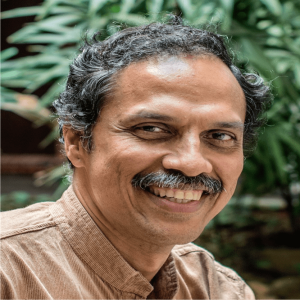
In this episode, Divya speaks with Sharachchandra or Sharad Lele, Distinguished Fellow in Environmental Policy and Governance at ATREE (Ashoka Trust for Research in Ecology and the Environment) in Bangalore, India. They discuss two of Sharad’s books, “Democratizing Forest Governance in India” which he co-edited with Ajit Menon, and his other book titled “Rethinking Environmentalism: Linking Justice, Sustainability and Diversity,” which he co-edited with Eduardo Brondizio, John Bryne, Georgina Mace, and Joan Martinez-Alier. Divya and Sharad use the discussion on the books as a way to unpack some of the fundamental questions like why are rights necessary, what is the meaning of democracy, and what is the role of state in the current context. They also talk about colonialism and its imprints on forest governance in postcolonial India. Sharad argues that, in the context of India, a country that has been traditionally hierarchical and where the state or the federal agency has all the powers, there are still colonial structures that are embedded in the system that reinforces those hierarchies. He suggests that recognizing citizens’ rights and their ability to exercise them fully is one way to break away from colonial and hierarchical mindsets.
Towards the end, Sharad shares that the commons is an arena with enormous scope for interdisciplinary work, yet academia and its various disciplines tend to fragment those spaces. He suggests that people working on the commons need to be alert to such tendencies and break away from the confines of a discipline by continuously asking how and in what ways their work can produce knowledge for meaningful change.
References:
Sharad’s bio: https://www.atree.org/users/dr-sharachchandra-lele
1. Agarwal, Anil, and Sunita Narain. "State of India's environment, 1984-85. The Second Citizens' report." (1985).
2. Lélé, Sharachchandra M. "Sustainable development: a critical review." World development 19.6 (1991): 607-621.
3. Lélé, Sharachchandra, and Richard B. Norgaard. "Sustainability and the scientist’s burden." Conservation biology 10.2 (1996): 354-365.
4. Lele, Sharachchandra Madhukar, and Ajit Menon, eds. Democratizing forest governance in India. New Delhi: Oxford University Press, 2014.
5. Lele, Sharachchandra, et al., eds. Rethinking environmentalism: Linking justice, sustainability, and diversity. Vol. 23. MIT Press, 2019.
6. Lélé, Sharachchandra, and Richard B. Norgaard. "Practicing interdisciplinarity." BioScience 55.11 (2005): 967-975.
7. Wutich, A., Cardenas, J. C., Lele, S., Pahl-Wostl, C., Rauschmayer, F., Schleyer, C., ... & Zwarteveen, M. Integrating Sustainability, Justice, and Diversity?.
8. Lele, Sharachchandra, et al. "Adapting to climate change in rapidly urbanizing river basins: insights from a multiple-concerns, multiple-stressors, and multi-level approach." Water International 43.2 (2018): 281-304.
Sep 12, 2022
Sep 12, 2022
1 hr 19 min
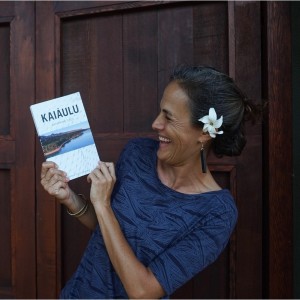
In this episode, Michael speaks with Mehana Blaich Vaughan, associate professor at the University of Hawaiʻi at Mānoa in the Department of Natural Resources and Environmental Management in the College of Tropical Agriculture and Human Resources. Mehana is an environmental social scientist whose work focuses on indigenous and community-based natural resource management.
Michael asks Mehana about her book, Kaiaulu: Gathering Tides. In this book, Mehana describes the relationship between Hawaiian people and their land and water. Throughout this book Mehana describes how Hawaiians view nature as a partner rather than as a resource. The book is a guide to important Hawaiian concepts such as Kuleana, embodying the idea that access to the environment is partnered with obligations to it and to the one’s community. Mehana talks with Michael about this and other related terms that form a network of understanding for a worldview that is quite different from the dominant bureaucratized, westernized position. During their discussion, Mehana also talks about the land dispossession that Hawaiians have faced, and how some Hawaiian communities have been trying to reassert their environmental traditions in the context of Hawaiian state bureaucracy.
Mehana’s website:http://mehanavaughan.huiainamomona.org/
Website for Kipuka Kuleana: https://www.kipukakuleana.org/
References:
Vaughan, M. B. 2018. Kaiaulu: Gathering Tides. Oregon State University Press.
Diver, S., M. Vaughan, M. Baker-Médard, and H. Lukacs. 2019. Recognizing “reciprocal relations” to restore community access to land and water. International journal of the commons 13(1):400.

Sep 9, 2022
Sep 9, 2022
15 min
This insight episode comes from full episode seventy-five with Graeme Cumming.
Graeme is a Professor at James Cooke University in Townsville, Australia and the Director of the Australian Research Council (ARC) Centre of Excellence for Coral Reef Studies.
Graeme talks with Stefan about the lack of methodological transparency in many datasets and the implications of this. Graeme discusses two of his past projects, one on the spread of avian influenza and the other on marine park permitting, to illustrate the importance of understanding and using scale correctly when doing research.
Link to scale mismatch on GBR paper: https://www.sciencedirect.com/science/article/pii/S2590332220303511
University page: https://www.coralcoe.org.au/person/gscumming
In Common Website: https://www.incommonpodcast.org
Connect with us on Twitter: https://twitter.com/InCommonPod
Support us on Patreon: https://www.patreon.com/incommonpodcast
Sep 6, 2022
Sep 6, 2022
35 min
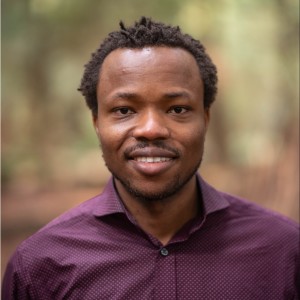
Listen to a conversation that Frank van Laerhoven had with Samuel Adeyanju.
Together with Janette Bulkan, Jonathan C. Onyekwelu, Guillaume Peterson St-Laurent, Robert Kozak, Terry Sunderland, and Bernd Stimm, Sam co-authored a recent IJC publication entitled Drivers of Biodiversity Conservation in Sacred Groves: A Comparative Study of Three Sacred Groves in Southwest Nigeria.
Sacred groves refer to land or bodies of water that have special spiritual significance to peoples and communities Biodiversity conservation appears to be an unintended, but arguably very fortunate by-product of sacred groves. Sacred groves in Nigeria are governed through a multiplicity of institutional arrangements that afford formal and informal roles to both communities and government.
Sam’s research shows how threats in the form of changing beliefs and taboos can lead to the gradual conversion of sacred groves into land used for agricultural and residential purposes, instead. Mistrust and tensions between communities and government, form another treat to what sacred groves can mean for biodiversity. Also, and paradoxically, the success of sacred groves may possibly also undermine the positive effect that they can have on biodiversity.
Sam’s is based at the University of British Columbia, Canada. His research broadly focuses on African environmental politics with a special interest in livelihoods and community forestry. He has researched various forest management and environmental related issues in Nigeria, Ghana, Zambia, and Tanzania.
The paper discussed in this episode can be placed in a tradition of attention for the role of resources with spiritual or cultural meaning in the International Journal of the Commons. For example, you may want to check out the following titles, also:
- Bertacchini, E., & Gould, P. (2021). Collective Action Dilemmas at Cultural Heritage Sites: An Application of the IAD-NAAS Framework. International Journal of the Commons, 15(1).
- Reynolds, T., Stave, K., Sisay, T., & Eshete, A. (2017). Changes in community perspectives on the roles and rules of church forests in northern Ethiopia: evidence from a panel survey of four Ethiopian Orthodox communities. International Journal of the Commons, 11(1).
- Samakov, A., & Berkes, F. (2017). Spiritual commons: sacred sites as core of community-conserved areas in Kyrgyzstan. International Journal of the Commons, 11(1).
Aug 26, 2022
Aug 26, 2022
9 min
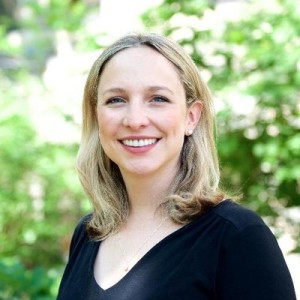
This insight episode comes from full episode seventy-four with Sara Meerow.
Sara is an assistant professor at the School of Geographical Sciences and Urban Planning at Arizona State University. Her work focuses on interdisciplinary social-ecological systems, specifically urban geography and planning.
Sara talks with Michael about the multiple meanings of “resilience,” and the importance of clarity regarding what terms like “resilience” and “sustainability” signify in order for collaborative work to be produced.
Sara's Website: https://sgsup.asu.edu/sara-meerow
Meerow, Sara, and Joshua P. Newell. 2019. “Urban Resilience for Whom, What, When, Where, and Why?” Urban Geography 40 (3): 309–29. https://doi.org/10.1080/02723638.2016.1206395.
In Common Website: https://www.incommonpodcast.org
Connect with us on Twitter: https://twitter.com/InCommonPod
Support us on Patreon: https://www.patreon.com/incommonpodcast

Aug 22, 2022
Aug 22, 2022
1 hr 26 min
In this episode, Michael speaks with Erin O’Donnell, Early Career Academic Fellow at Melbourne Law School at the University of Melbourne.
Erin is a water law and policy specialist focusing on water markets and governance. She has worked in water resource management since 2002, in both the private and public sectors. Erin is recognized internationally for her research into the groundbreaking new field of legal rights for rivers, and the challenges and opportunities these new rights create for protecting the multiple social, cultural and natural values of rivers.
Erin’s latest book, Legal Rights for Rivers: Competition, Collaboration, and Water Governance, is available now from Routledge. In this book, Erin considers two case studies of legal rights for rivers, one in Southeastern Australia and one in the Western United States. In each case, the rights of rivers are promoted through what Erin calls environmental water managers who purchase water rights, and Erin argues that what might seem like a movement towards a more intrinsic value of nature in fact can lead to a backlash against the newfound power of nature as a legal entity, and can relegate nature to being “just another water user” that is competing with everyone else in water markets. Erin ultimately argues for what we call a paradigm shift, in which we come to see nature as living entity with value in its own right, at which point we wouldn’t need to worry as much about making it legible to the law as a legal person.
Erin’s website: https://law.unimelb.edu.au/about/staff/erin-odonnell
References:
O'Donnell, Erin. 2018. Legal Rights for Rivers: Competition, Collaboration and Water Governance. Taylor and Francis.

Aug 12, 2022
Aug 12, 2022
14 min
This insight episode comes from full episode seventy-one with Bridie McGreavy.
Bridie is an Associate Professor in the Department of Communication and Journalism at the University of Maine, Orono.
Bridie talks with Michael and special guest Karen Bieluch, a prior colleague of his at Dartmouth College and current colleague of Bridie at the University of Maine, about the importance of indigenous knowledge and relationships with the land in understanding and protecting shellfish fisheries and local communities in Maine.
Bridie's website: https://bmcgreavy.org
In Common Website: https://www.incommonpodcast.org
Connect with us on Twitter: https://twitter.com/InCommonPod
Support us on Patreon: https://www.patreon.com/incommonpodcast