

115.8K
Downloads
246
Episodes
In Common explores the connections between humans, their environment and each other through stories told by scholars and practitioners. In-depth interviews and methods webinars explore interdisciplinary and transdisciplinary work on commons governance, conservation and development, social-ecological resilience, and sustainability.
Episodes
Nov 25, 2019
Nov 25, 2019
1 hr 4 min
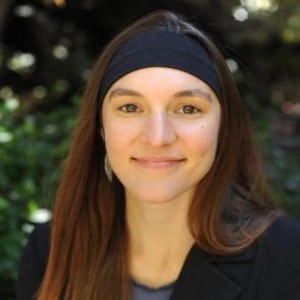
Liz Carlisle is an Assistant Professor in the Environmental Studies Program at University of California, Santa Barbara, where her work focuses on fostering a more just and sustainable food system. She holds a Ph.D. in Geography from UC Berkeley and a B.A. in Folklore and Mythology from Harvard University, and she formerly served as Legislative Correspondent for Agriculture and Natural Resources in the Office of U.S. Senator Jon Tester. Recognized for her academic publishing with the Elsevier Atlas Award, which honors research with social impact, Liz has also written numerous pieces for general audience readers, in the New York Times, Los Angeles Times, Business Insider, and Stanford Social Innovation Review. She is the author of two books about transition to sustainable farming: Lentil Underground (winner of the 2016 Montana Book Award) and Grain by Grain, coauthored with farmer Bob Quinn.
UCSB webpage
https://www.es.ucsb.edu/people/liz-carlisle
Personal website
Finding Sustainability Podcast
@find_sust_pod
https://twitter.com/find_sust_pod
Environmental Social Science Network
https://twitter.com/ESS_Network
@ESS_Network
Nov 21, 2019
Nov 21, 2019
8 min
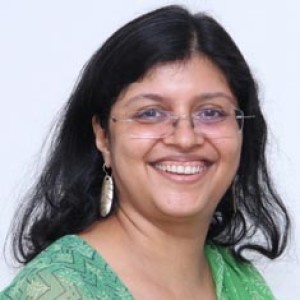
This insight clip is taken from episode 017 of the podcast with Harini Nagendra. Harini explains some of the challenges and bias of the science system between the global north and the global south.
Harini Nagendra is a Professor of Sustainability at Azim Premji University. Her recent book "Nature in the City: Bengaluru in the Past, Present, and Future" (Oxford University Press India, 2016) examines the transformation of human-nature interactions in Bangalore from the 6th century CE to the present, addressing the implications of such change for the urban sustainability of fast-growing cities in the global South. The book was listed by the science journal Nature as one of the five best science picks of the week in its issue of July 28 2016.
https://azimpremjiuniversity.edu.in/SitePages/harini-nagendra.aspx
Prof. Nagendra is an ecologist who uses methods from the natural and social sciences - satellite remote sensing, biodiversity studies, archival research, GIS, institutional analysis, and community interviews, to examine the sustainability of forests and cities in the global South. She completed her PhD from the Centre for Ecological Sciences in the Indian Institute of Science in 1998. Since then, she has conducted research and taught at multiple institutions, and was most recently a Hubert H Humphrey Distinguished Visiting Professor at Macalester College, Saint Paul, Minnesota in 2013. She is a recipient of numerous awards for her research, including a 2017 Web of Science 2017 India Research Excellence Award as the most cited Indian researcher in the category of Interdisciplinary Research; a 2013 Elinor Ostrom Senior Scholar award for her research and practice on issues of the urban commons, and a 2009 Cozzarelli Prize from the Proceedings of the National Academy of Sciences USA (with Elinor Ostrom).
Harini Nagendra has authored two books, and over 150 peer reviewed publications, including in Nature, Nature Sustainability and Science.
Harini’s two books:
Nature in the City: Bengaluru in the Past, Present and Future
https://www.amazon.com/Nature-City-Bengaluru-Present-Future/dp/0199465924
Cities and Canopies: Trees in Indian Cities
https://www.amazon.com/Cities-Canopies-Trees-Indian/dp/0670091219/ref=sr_1_1?keywords=Cities+and+Canopies%3A+Trees+in+Indian+Cities&qid=1569093142&s=books&sr=1-1
She writes extensively on her research for the public via newspaper and magazine articles, science blogs, and has given a number of public talks for science communication. She also engages with international research on global environmental change, She is a Steering Committees member of the Future Earth Programme on Ecosystem Change and Society and a former Steering Committee Member of the Global Land Project, Diversitas and a Capacity Building Committee member of the Asia Pacific Network for Global Environmental Change. She has also been a Lead Author of the 5th IPCC Report - Working Group III.
Harini’s Google Scholar page
https://scholar.google.de/citations?user=GWyr-pgAAAAJ&hl=de&oi=ao
Link to her commentary piece in Nature 2018
https://www.nature.com/articles/d41586-018-05210-0
Link to her recent article in Nature Sustainability
https://www.nature.com/articles/s41893-018-0101-5?platform=hootsuite
Finding Sustainability Podcast
@find_sust_pod
https://twitter.com/find_sust_pod
Environmental Social Science Network
https://twitter.com/ESS_Network
@ESS_Network

Nov 18, 2019
Nov 18, 2019
1 hr 6 min
Kai Whiting is a researcher and lecturer in sustainability and Stoicism at the University of Lisbon, Portugal. His main research interests are how to better account for resource use and the practical application of Stoic philosophy to the challenges of the 21st century. He has a background in Environmental Engineering, but believes that without philosophy we will never understand the “why” we do what we do, which is why he combines both disciplines in his approach.
Kai’s website
Follow Kai on Twitter
https://twitter.com/kaiwhiting?lang=en
Kai’s Google Scholar page
https://scholar.google.de/citations?user=Cu-BwFcAAAAJ&hl=de&oi=ao
Text interview with Kai from the Daily Stoic
https://dailystoic.com/kai-whiting-interview/
Finding Sustainability Podcast
@find_sust_pod
https://twitter.com/find_sust_pod
Environmental Social Science Network
https://twitter.com/ESS_Network
@ESS_Network
Nov 11, 2019
Nov 11, 2019
16 min
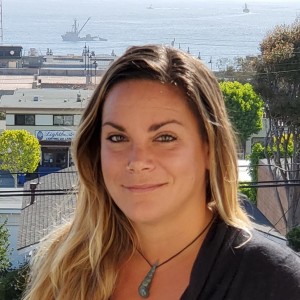
This ‘Insight’ episode is taken from episode 010 of the podcast with Elena Finkbeiner. In this short segment, Elena discusses reflexivity in the scientific process and then explains the usefulness of games or behavioral economics experiments with fishers in Mexico.
Elena Finkbeiner is the Fisheries Science Program Manager at Conservation International’s Center for Oceans. She is interested in understanding and improving adaptive capacity and equality within and across fishing communities and integrating a human rights-based approach to fisheries governance. She has over a decade of experience working in small-scale fisheries along the Baja Peninsula in Mexico. Elena holds a degree from UC Santa Cruz, a master’s degree from Duke University’s Nicholas School for the Environment and a PhD from Stanford University.
Conservation International is a non-governmental organization (NGO) with over 30 years of experience, with a mission statement to empower societies to responsibly and sustainably care for nature, our global biodiversity, for the well-being of humanity.
Conservation International - Center for Oceans
https://www.conservation.org/about/center-for-oceans
Check out:
Finding Sustainability Podcast
@find_sust_pod
https://twitter.com/find_sust_pod
Environmental Social Science Network
https://twitter.com/ESS_Network
@ESS_Network
Nov 7, 2019
Nov 7, 2019
13 min
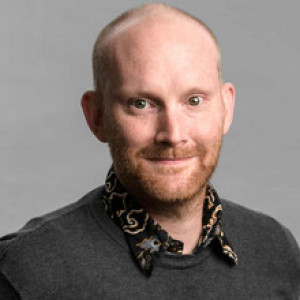
This ‘Insight’ episode is taken from episode 005 of the podcast with David Abson.
In this short segment, Dave discusses economic valuation of the ecosystem services concept, governance in ecosystem service frameworks and the challenge with operationalizing them.
Dave holds a Professorship for Sustainability Economics and Assessment at Leuphana University in Germany. Dave explains the path that led him to academia, and then we discuss his understanding of sustainability premised on justice. The concept of land sparing vs land sharing is discussed as well as the ecosystem services concept, including its operationalization and dimensions of governance. Dave also explains the leverage points concept, and its usefulness for sustainability science research. We touch on numerous other topics including open access publishing and how he thinks about interdisciplinarity.
Dave's University page
Dave's Google Scholar page
https://scholar.google.de/citations?user=gyyNJWMAAAAJ&hl=en&oi=ao
Finding Sustainability Podcast
@find_sust_pod
https://twitter.com/find_sust_pod
Environmental Social Science Network
https://twitter.com/ESS_Network
@ESS_Network

Nov 4, 2019
Nov 4, 2019
1 hr 12 min
In this podcast, Michael and Stefan have a conversation with Courtney Hammond Wagner. Courtney is a postdoctoral research fellow at Stanford University. We discuss some of the challenges of navigating a career in academia, particularly as a young parent and changing rules and norms of the science system itself. We then get into Courtney’s research on water governance in California, and challenges for using frameworks in science, with the example of Ostrom’s social-ecological systems framework.
As an environmental social scientist, Courtney’s research broadly aims to understand how we design incentives, rules and policies to collectively change behavior in water resource dilemmas to improve community well-being and ecological outcomes. At Water in the west, Courtney is working on two aspects of California’s 2014 Sustainable Groundwater Management Act (SGMA) policy process: the mandated use of climate information in groundwater sustainability plans and the role of incentives in farmer groundwater use. This work builds on her previous SGMA research in Yolo County, California to identify the role of farmer social norms and fairness perceptions in the SGMA policy process.
Courtney received a Ph.D. in Natural Resources from the University of Vermont where she studied policy design for declining water quality from agricultural nutrient runoff, and has a BA in Psychology from Dartmouth College.
https://waterinthewest.stanford.edu/about/people/courtney-hammond-wagner
https://scholar.google.com/citations?user=FAgQyXgAAAAJ&hl=en
Finding Sustainability Podcast
@find_sust_pod
https://twitter.com/find_sust_pod
Environmental Social Science Network
https://twitter.com/ESS_Network
@ESS_Network
Oct 30, 2019
Oct 30, 2019
15 min
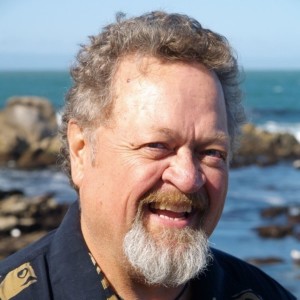
This 'Insight' episode is a clip from episode 12 of the podcast with Larry Crowder. Insight episodes feature noteworthy and insightful clips from previous episodes.
Larry Crowder is a professor of Biology and Marine Conservation at the Hopkins Marine Station at Stanford University. He is also a senior fellow at the Stanford Woods Institute of the Environment, and affiliated faculty at the Stanford Center for Ocean Solutions. During our discussion Larry described how he began his career in ecology, his seminal work on sea turtle ecology and conservation, and his subsequent transition to a more interdisciplinary space where he has studied multiple marine conservation issues such as fisheries bycatch and governance.
Faculty website: https://crowderlab.stanford.edu/
On Larry's lab website we found this blog on marine conservation: https://crowderlab.stanford.edu/mcb
Google scholar page: https://scholar.google.com/citations?user=Qjb5DnwAAAAJ&hl=en&oi=ao
Finding Sustainability Podcast
@find_sust_pod
https://twitter.com/find_sust_pod
Environmental Social Science Network
https://twitter.com/ESS_Network
@ESS_Network
Oct 27, 2019
Oct 27, 2019
52 min
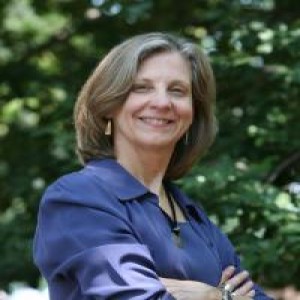
In this episode we spoke with Margaret Palmer. Dr. Palmer is a Distinguished University Professor at the University of Maryland, College Park, and the director of the National Socio-Environmental Synthesis Center (https://www.sesync.org/).
Much of our discussion focused on the inception and development of SESYNC over the past ten years. We dug a bit into the philosophies and practices at SESYNC, and the role that the science of teams plays in these. Additionally, we spoke about Dr. Palmer's fundamental work on stream ecology, how she came to be interested in this type of work, and how this led to an engagement with non-academic actors based on the challenges she observed in these systems.
Dr. Palmer's professional websites:
https://palmerlab.umd.edu/team/mpalmer/
https://www.sesync.org/users/mpalmer
Link to the video of Dr. Palmer on the Colbert Report that Michael mentions: http://www.cc.com/video-clips/6s93dq/the-colbert-report-coal-comfort---margaret-palmer
Oct 21, 2019
Oct 21, 2019
53 min
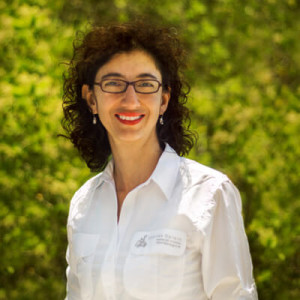
María José Barragán is the Science Director for the Charles Darwin Foundation on the Galapagos Islands, Ecuador. She oversees the organization's 20 marine and terrestrial research projects, and is helping to make many of them interdisciplinary and inclusive of local stakeholder needs and knowledge.
https://www.darwinfoundation.org/en/
María José received a PhD in Human Geography at Memorial University of Newfoundland in St. John’s, Canada. Her undergraduate degree was in the Biological Sciences at the Pontifical Catholic University, Ecuador, and Master’s degree from the Technical University of Munich, Germany (TUM) focusing on coastal marine ecosystems and marine protected areas (MPAs).
Her PhD research was inspired by the interactive governance framework, and was applied to better understand the governability of MPAs (with a case study developed in the Galapagos Marine Reserve). After graduation she collaborated with research clusters of the Too Big To Ignore (TBTI) Global Research Partnership for Small-Scale Fisheries Research, conducting research and publishing on small-scale fisheries. Later on, she had a postdoctoral research position at the “Development and Knowledge Sociology” Working Group at the Leibniz Centre for Tropical Marine Research (ZMT) in Bremen, Germany. During that time, she conceptualized and co-developed new research agendas, by integrating the development and knowledge sociology approach into small-scale fisheries sustainability, fishing communities’ viability, food security from the marine perspective and marine resource governance.
https://www.darwinfoundation.org/en/component/contact/contact/14-staff/118-maria-jose-barragan
Finding Sustainability Podcast
@find_sust_pod
https://twitter.com/find_sust_pod
Environmental Social Science Network
https://twitter.com/ESS_Network
@ESS_Network
Sep 23, 2019
Sep 23, 2019
1 hr 16 min
Harini Nagendra is a Professor of Sustainability at Azim Premji University. Her recent book "Nature in the City: Bengaluru in the Past, Present, and Future" (Oxford University Press India, 2016) examines the transformation of human-nature interactions in Bangalore from the 6th century CE to the present, addressing the implications of such change for the urban sustainability of fast-growing cities in the global South. The book was listed by the science journal Nature as one of the five best science picks of the week in its issue of July 28 2016.
https://azimpremjiuniversity.edu.in/SitePages/harini-nagendra.aspx
Nature in the City: Bengaluru in the Past, Present and Future
https://www.amazon.com/Nature-City-Bengaluru-Present-Future/dp/0199465924
Cities and Canopies: Trees in Indian Cities
Prof. Nagendra is an ecologist who uses methods from the natural and social sciences - satellite remote sensing, biodiversity studies, archival research, GIS, institutional analysis, and community interviews, to examine the sustainability of forests and cities in the global South. She completed her PhD from the Centre for Ecological Sciences in the Indian Institute of Science in 1998. Since then, she has conducted research and taught at multiple institutions, and was most recently a Hubert H Humphrey Distinguished Visiting Professor at Macalester College, Saint Paul, Minnesota in 2013. She is a recipient of numerous awards for her research, including a 2017 Web of Science 2017 India Research Excellence Award as the most cited Indian researcher in the category of Interdisciplinary Research; a 2013 Elinor Ostrom Senior Scholar award for her research and practice on issues of the urban commons, and a 2009 Cozzarelli Prize from the Proceedings of the National Academy of Sciences USA (with Elinor Ostrom).
Along with her two books, she has authored over 150 peer reviewed publications, including in journals such as Nature, Nature Sustainability and Science. She writes extensively on her research for the public via newspaper and magazine articles, science blogs, and has given a number of public talks for science communication. She also engages with international research on global environmental change, She is a Steering Committees member of the Future Earth Programme on Ecosystem Change and Society and a former Steering Committee Member of the Global Land Project, Diversitas and a Capacity Building Committee member of the Asia Pacific Network for Global Environmental Change. She has also been a Lead Author of the 5th IPCC Report - Working Group III.
Harini’s Google Scholar page
https://scholar.google.de/citations?user=GWyr-pgAAAAJ&hl=de&oi=ao
Link to her commentary piece in Nature 2018
https://www.nature.com/articles/d41586-018-05210-0
Link to her recent article in Nature Sustainability
https://www.nature.com/articles/s41893-018-0101-5?platform=hootsuite