
115.8K
Downloads
246
Episodes
In Common explores the connections between humans, their environment and each other through stories told by scholars and practitioners. In-depth interviews and methods webinars explore interdisciplinary and transdisciplinary work on commons governance, conservation and development, social-ecological resilience, and sustainability.
Episodes
Sep 16, 2019
Sep 16, 2019
1 hr 4 min
This week we spoke with Nate Engle, a Senior Climate Change Specialist with the World Bank's Water Global Practice. We discussed his time in graduate school at the University of Michigan, the value of a PhD, his experience on the Hill as a AAAS fellow, and his move to the World Bank where he now supports programs on adaptation and resilience.
Here is the paper that Nate mentioned co-authoring with Mike Schoon and Chanda meek:
Aug 26, 2019
Aug 26, 2019
1 hr 1 min
J.T. Erbaugh is a postdoc in the EEES PhD program at Dartmouth (https://sites.dartmouth.edu/EEES/). We spoke about his PhD education with Arun Agrawal at the University of Michigan's School for Environment and Sustainability (https://seas.umich.edu/), his time in the field studying agroforestry in Indonesia when he got "hooked", and his subsequent research studying forest policy and governance as an interdisciplinary environmental social scientist!
JT's information:
Personal website: http://www.erbaughresearch.com/en/home/
Google scholar page: https://scholar.google.com/citations?user=r_ZTFYIAAAAJ&hl=en&oi=ao
Other stuff:
Here is the website for ICPSR, which both J.T. and Michael struggled to spell out: https://www.icpsr.umich.edu/icpsrweb/
Here is the website on registered reports that Michael mentioned: https://cos.io/rr/. You can hear more about these issues in our earlier interview with Neal Haddaway.
And finally, here is the full reference information for the article led by Oran Young:
Young, O.R., et al. 2006. A portfolio approach to analyzing complex human-environment interactions: Institutions and land change. Ecology and Society 11.

Aug 19, 2019
Aug 19, 2019
45 min
Kirsty Nash (@nasherk) is the founder of ‘aKIDemic Life’ (@akidemiclife), a platform providing resources empowering parents to navigate life and academia. Kirsty is passionate about developing aKIDemica Life, sparked by the help she received during her first year of motherhood. It was only due to the great help she received from both health professionals and colleagues that she got back on track and was able to return to research part time. aKIDemic Life is her way of paying forward the help she received at a very difficult time.
Kirsty is a Research Fellow at the Centre for Marine Socioecology in the Institute for Marine and Antarctic Studies in Tasmania, Australia. She is interested in the resilience of marine ecosystems and the functional and spatial ecology of fishes. Her research sits at the nexus between resilience theory and empiricism: she is particularly interested in testing the practical application of theory with empirical data and modelling.
https://www.utas.edu.au/profiles/staff/imas/kirsty-nash
https://scholar.google.de/citations?user=o479EwYAAAAJ&hl=en&oi=ao
Aug 12, 2019
Aug 12, 2019
1 hr 6 min
Jeremy Pittman is an Assistant Professor in the School of Planning at the University of Waterloo, Canada. Jeremy holds a Ph.D. in Social and Ecological Sustainability from the University of Waterloo, and an M.Sc. in Geography from the University of Regina. His research focuses on environmental policy, governance and social-ecological connectivity in rangelands, coastal areas and small-scale fisheries.
https://twitter.com/pittman17?lang=en
https://uwaterloo.ca/planning/people-profiles/jeremy-pittman
https://scholar.google.de/citations?user=eB55IYYAAAAJ&hl=en&oi=ao
In the podcast we discuss his work on Canadian rangelands, small-scale fisheries in Uruguay, organizing different academic tasks, challenges with research ethics such as site selection, giving back to communities, knowledge grabbing, open-access publishing, co-authorship and how to pick a journal. We also discuss strategies for how to read academic articles and time management with kids.
Aug 8, 2019
Aug 8, 2019
1 hr 6 min
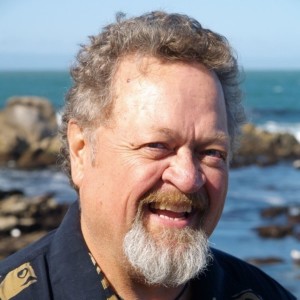
Larry Crowder is a professor of Biology and Marine Conservation at the Hopkins Marine Station at Stanford University. He is also a senior fellow at the Stanford Woods Institute of the Environment, and affiliated faculty at the Stanford Center for Ocean Solutions. During our discussion Larry described how he began his career in ecology, his seminal work on sea turtle ecology and conservation, and his subsequent transition to a more interdisciplinary space where he has studied multiple marine conservation issues such as fisheries bycatch and governance.
Faculty website: https://crowderlab.stanford.edu/
On Larry's lab website we found this blog on marine conservation: https://crowderlab.stanford.edu/mcb
Google scholar page: https://scholar.google.com/citations?user=Qjb5DnwAAAAJ&hl=en&oi=ao

Aug 5, 2019
Aug 5, 2019
1 hr 30 min
Krister Andersson is a Professor of Political Science and Director of the Center of the Governance of Natural Resources at the University of Colorado at Boulder. Krister primarily studies forest governance and the effects of governmental reforms and local institutional arrangements on social and environmental outcomes. In our talk, Krister discusses his time at the Food and Agriculture Organization (FAO), his involvement in the International Forestry Resources and Institutions (IFRI) research program, learning from Lin Ostrom, and what we need to do to address scientific challenges in the future.
Faculty website: https://www.colorado.edu/polisci/people/faculty/krister-andersson
Google scholar page: https://scholar.google.com/citations?user=PJ2c5_kAAAAJ&hl=en&oi=ao
Jul 29, 2019
Jul 29, 2019
57 min
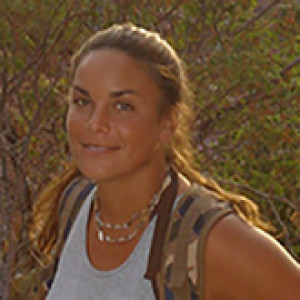
Elena Finkbeiner is the Fisheries Science Program Manager at Conservation International’s Center for Oceans. She wants to understand and improve adaptive capacity and equality within and across fishing communities and integrate a human rights-based approach to fisheries governance. She has over a decade of experience working in small-scale fisheries along the Baja Peninsula in Mexico. Elena holds a degree from UC Santa Cruz, a master’s degree from Duke University’s Nicholas School for the Environment and a PhD from Stanford University.
Conservation International is a non-governmental organization (NGO) with over 30 years of experience, with a mission statement to empower societies to responsibly and sustainably care for nature, our global biodiversity, for the well-being of humanity.
Jul 19, 2019
Jul 19, 2019
47 min
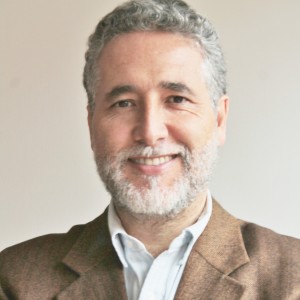
Juan Camilo Cárdenas is a professor of economics a la Universidad de los Andes in Colombia. He is considered a leading expert in the field of experimental economics, applying field-based methods to explore how actors can resolve real-world social dilemmas. Much of his work involves the use of games to simulate these dilemmas.
Google scholar page: https://scholar.google.com/citations?user=yfeFFpIAAAAJ&hl=
Faculty website: https://economia.uniandes.edu.co/index.php?option=com_profesor&view=profesorp&profesor=9&Itemid=474
Jul 17, 2019
Jul 17, 2019
46 min
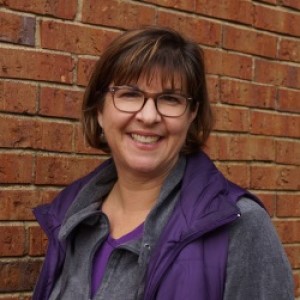
Helen Rozwadowski is an associate professor of History and founder the Maritime Studies program at the University of Connecticut. Her teaching includes environmental history, history of science, and public history, as well as interdisciplinary maritime studies courses.
Twitter @oceanhistories
https://history.uconn.edu/faculty-by-name/helen-m-rozwadowski/#
Helen is the author of numerous books about the history of the ocean, including her most recent book titled ‘Vast Expanses: A History of the Oceans’. In the book she demonstrates that the human relationship with the ocean began in evolutionary time and has tightened dramatically since them, aims to provide a model for writing ocean history, and argues that ocean histories must examine and historicize the technologies and knowledges systems that enabled and accompanied human interactions with the sea.
http://fathomingtheocean.com/books/
Her book, Fathoming the Ocean: The Discovery and Exploration of the Deep Sea (2005), which reveals the simultaneous scientific and cultural discovery of the ocean’s depths in the mid nineteenth century, won the History of Science Society’s Davis Prize for best book directed to a wide public audience. She has written a history of 20th century marine science, The Sea Knows No Boundaries (2002), a history of 20th century marine sciences supporting international fisheries policy. She has co-edited three volumes that have helped establish the field of history of oceanography: Soundings and Crossings: Doing Science at Sea 1800-1970 (2017), The Machine in Neptune’s Garden: Perspectives on Technology and the Marine Environment (2004), and Extremes: Oceanography’s Adventures at the Poles (2007).
Helen has worked in the past both as a public historian and also in academia. She won the Ida and Henry Schuman Prize from the History of Science Society, was awarded the William E. & Mary B. Ritter Fellowship of the Scripps Institution of Oceanography, and has received grants and fellowships from the Rachel Carson Center for Environment and Society, the UConn Humanities Institute, National Endowment for the Humanities, National Science Foundation, and the Smithsonian Institution.
Jul 4, 2019
Jul 4, 2019
58 min
Neal Haddaway is a Senior Research Fellow at the Stockholm Environment Institute (SEI) in Sweden. He works on various projects involving evidence synthesis in environmental and development topics, and has been with SEI since the start of 2016. Neal has a PhD in conservation biology, and since 2012 Neal has been helping to establish and improve guidance for formalized systematic reviews and maps in environmental management and more recently in international development.