
115.8K
Downloads
246
Episodes
In Common explores the connections between humans, their environment and each other through stories told by scholars and practitioners. In-depth interviews and methods webinars explore interdisciplinary and transdisciplinary work on commons governance, conservation and development, social-ecological resilience, and sustainability.
Episodes

Feb 23, 2020
Feb 23, 2020
59 min
Fiona Nunan is a Professor of Environment and Development within the International Development Department at the University of Birmingham in the UK.
https://www.birmingham.ac.uk/staff/profiles/gov/nunan-fiona.aspx#staffdetails
https://twitter.com/fionanunan?lang=en
Her interests and experience focus on natural resource governance and management in developing country settings, particularly within inland fisheries and coastal locations in East and Southern Africa, and on exploring the links between poverty and the environment.
She was appointed to Head of the department in 2014 and was previously the Director of Postgraduate Research. She leads on the new Environment, Sustainability and Politics pathway of the MSc program, and works closely with colleagues in the Political Science and International Studies Department.
Fiona’s Google Scholar page
https://scholar.google.de/citations?user=gjUJQYcAAAAJ&hl=de&oi=ao
Her first book was published in 2015 by Routledge, titled: 'Understanding Poverty and the Environment: Analytical Frameworks and Approaches'. The book makes an innovative contribution to literature on environment and development by bringing together a diverse range of analytical approaches and frameworks that can be used to study human-nature interactions.Her second book, which we discuss in detail in the podcast, was published at the beginning of this year 2020 by Routledge, titled “Governing Renewable Natural Resources: theories and frameworks”.
Link to book ‘Governing Renewable Resources’
Link to book ‘Poverty and the Environment’
Finding Sustainability Podcast
@find_sust_pod
https://twitter.com/find_sust_pod
Environmental Social Science Network
https://twitter.com/ESS_Network
@ESS_Network
Feb 17, 2020
Feb 17, 2020
48 min
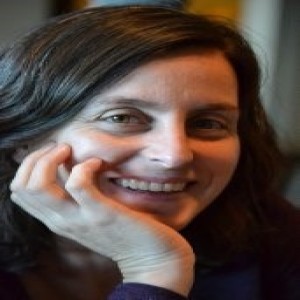
For this episode we spoke with Irene Perez Ibarra, a researcher at the AgriFood Institute of Aragon, housed within the University of Zaragoza, Spain. We chatted about her initial scientific curiosity, her trip to Arizona State University for a postdoc with Marco Janssen, her appreciation for "beautiful" (agent-based) models, the challenges of raising two young children, and ultimately her voyage back to Spain for her current position. All that's missing is a good tortilla.
Feb 9, 2020
Feb 9, 2020
1 hr 16 min
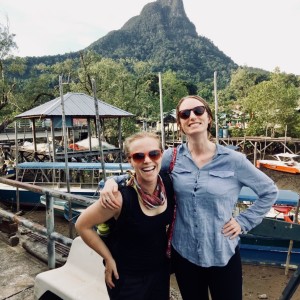
In this episode we spoke with Emily Darling from the Wildlife Conservation Society and Georgina Gurney at the ARC Centre of Excellence for Coral Reef Studies. They talked to us about a broadly comparative, social-ecological research project on fisheries governance they have been working on with support from the MacArthur Foundation. We discussed the challenges involved in the interdisciplinary and transdisciplinary aspects of the project, and how they addressed these together and with their project partners.
Show notes:
Emily's website: http://www.emilysdarling.com/
Georgina's website: https://www.coralcoe.org.au/person/georgina-gurney
New paper led by Georgina: https://www.sciencedirect.com/science/article/pii/S000632071931420X
Smith Conservation Research Fellowship that Emily enrolled in: https://conbio.org/mini-sites/smith-fellows
SNAPP program website: https://snappartnership.net/
Data mermaid tool website: datamermaid.org
Feb 3, 2020
Feb 3, 2020
58 min
This is a unique episode of the podcast. We have the opportunity to share the audio from a recent webinar about the current state of commons and social-ecological systems databases. The webinar was facilitated by the International Association for the Study of the Commons (IASC), and was hosted by their current President, Marco Janssen. The IASC is devoted to bringing together multi-disciplinary researchers, practitioners and policymakers for the purpose of improving governance and management, advancing understanding, and creating sustainable solutions for commons, common-pool resources, or any other form of shared resource.
The webinar includes numerous leading researchers, listed below. Together they discuss their experiences with databases, including the current state of their use, challenges for user engagement and comparative research as well as directions forward and advice for researchers.
Webinar participants include:
Marty Anderies - Professor, School of Sustainability, Arizona State University
https://sustainability.asu.edu/person/john-anderies/
Ulrich Frey - Researcher, Institute of Engineering Thermodynamics, German Space Agency
https://www.dlr.de/tt/en/desktopdefault.aspx/tabid-4074/6449_read-33700/
Sergio Villamayor Tomas - Research fellow, Institute of Environmental Science and Technology, Autonomous University of Barcelona, Spain.
https://ictaweb.uab.cat/personal_detail.php?id=4066
Graham Epstein - Environmental social scientist, University of Waterloo.
https://scholar.google.com/citations?user=S4JEmxgAAAAJ&hl=en
Marco Janssen - Professor, School of Sustainability, Director of the Center for Behavior, Institutions, and the Environment, Arizona State University. Marco is also the current President of the IASC.
Links to the databases discussed in the podcast:
https://ulrichfrey.eu/en/niis/
https://gamesforsustainability.org/
http://www.forestlivelihoods.org/ifri-dataset/
Finding Sustainability Podcast
@find_sust_pod
https://twitter.com/find_sust_pod
Environmental Social Science Network
https://twitter.com/ESS_Network
@ESS_Network
Jan 27, 2020
Jan 27, 2020
11 min
This insight is taken from our full interview with María José Barragán in episode 018 of the podcast, where you can listen to the full interview.
Our ‘Insight’ episodes feature short interview segments taken from our previous regular interviews, highlighting noteworthy topics discussed.
María José is the Science Director of the Charles Darwin Foundation on the Galapagos Islands, Ecuador. She oversees the organization's 20 marine and terrestrial research projects, and is helping to make many of them interdisciplinary and inclusive of local stakeholder needs and knowledge. In the episode she explains the multi-stakeholder and multi-disciplinary agenda setting processes guiding the Charles Darwin Foundation and their research activities on the Galapagos Islands.
https://www.darwinfoundation.org/en/
María José received a PhD in Human Geography at Memorial University of Newfoundland in St. John’s, Canada. Her undergraduate degree was in the Biological Sciences at the Pontifical Catholic University, Ecuador, and Master’s degree from the Technical University of Munich, Germany (TUM) focusing on coastal marine ecosystems and marine protected areas (MPAs).
Her Ph.D. research was inspired by the interactive governance framework, and was applied to better understand the governability of MPAs (with a case study developed in the Galapagos Marine Reserve). After graduation she collaborated with research clusters of the Too Big To Ignore (TBTI) Global Research Partnership for Small-Scale Fisheries Research, conducting research and publishing on small-scale fisheries. Later on, she had a postdoctoral research position at the “Development and Knowledge Sociology” Working Group at the Leibniz Centre for Tropical Marine Research (ZMT) in Bremen, Germany. During that time, she conceptualized and co-developed new research agendas, by integrating the development and knowledge sociology approach into small-scale fisheries sustainability, fishing communities’ viability, food security from the marine perspective and marine resource governance.
Finding Sustainability Podcast
@find_sust_pod
https://twitter.com/find_sust_pod
Environmental Social Science Network
https://twitter.com/ESS_Network
@ESS_Network

Jan 20, 2020
Jan 20, 2020
10 min
This insight episode is taken from episode 007 of the podcast, our conversation with Neal Haddaway. In the clip, Neal outlines the steps of a systematic literature review, talks about which databases to use, as well as the benefits and downsides to using Google Scholar as a search platform.
Neal Haddaway is a Senior Research Fellow at the Stockholm Environment Institute in Stockholm, Sweden. He works on various projects involving evidence synthesis in environmental and development topics. He has a PhD in conservation biology, and since 2012 Neal has been helping to establish and improve guidance for formalized systematic reviews and maps in environmental management and more recently in international development. Neal’s main research interest focuses on the provision of reliable evidence for policy and practice decision-making and increasing transparency in environmental management.
https://www.sei.org/people/neal-haddaway/
Neal’s Google Scholar
https://scholar.google.co.uk/citations?user=zABCBMMAAAAJ&hl=en&oi=ao
Center for Environmental Evidence
Systematic review reporting standards
Tool for estimating systematic review time requirements
Finding Sustainability Podcast
@find_sust_pod
https://twitter.com/find_sust_pod
Environmental Social Science Network
https://twitter.com/ESS_Network
@ESS_Network
Jan 13, 2020
Jan 13, 2020
56 min
Barry Ness is an Associate Professor at Lund University Centre for Sustainability Studies in Sweden. He is also the Director of the local interaction platform in Skåne, Sweden for the Mistra Urban Futures project, and the editor-in-chief of Challenges in Sustainability. His current research interests include inter- and transdisciplinary approaches for both comprehending and addressing complex sustainability challenges. Much of Barry's current research involves engagement with actors outside of academia. Currently, outreach efforts focus on how to improve the sustainability of craft beer production and consumption systems in southern Sweden, SustBeerLab, endorsed by Future Earth.
https://www.lucsus.lu.se/barry-ness
He is also a researcher and work package leader for the Globally and Locally-sustainable Food-Water-Energy Innovation in Urban Living Labs (GLOCULL) project, focusing on creating an urban living lab approach for the food-water-energy nexus. Barry is also a project researcher in LUCID project and the TRANSFORM project.
https://jpi-urbaneurope.eu/project/glocull/
Barry’s Google Scholar page
https://scholar.google.de/citations?user=zRPHAlAAAAAJ&hl=de&oi=ao
Article on reflexivity mentioned in the podcast
https://www.ecologyandsociety.org/vol23/iss4/art20/
Link to M.Sc. LUMES program
Finding Sustainability Podcast
@find_sust_pod
https://twitter.com/find_sust_pod
Environmental Social Science Network
https://twitter.com/ESS_Network
@ESS_Network
Jan 6, 2020
Jan 6, 2020
14 min
This insight is taken from episode 020 of the podcast, where Michael and Stefan have a conversation with Courtney Hammond Wagner. Courtney is a postdoctoral research fellow at Stanford University, working on water governance in the Western United States. In the clip the three of us discuss challenges in academic working culture, including being a parent in academia, productivist mentality and self-evaluation.
Finding Sustainability Podcast
@find_sust_pod
https://twitter.com/find_sust_pod
Environmental Social Science Network
https://twitter.com/ESS_Network
@ESS_Network
Dec 7, 2019
Dec 7, 2019
56 min
This past fall we spoke with Mark Lubell, a professor in the Department of Environmental Science and Policy and the co-director of the Center for Environmental Policy and Behavior (CEPB) at the University of California, Davis. We spoke about Mark's interdisciplinary engagements at his institution, the value of doing used-based research, the ecology of games framework that he has pioneered, and how tools like this are needed to capture complex social interactions in real-world policy environments.
Mark's website: http://www.des.ucdavis.edu/faculty/lubell/
CEPB website: https://environmentalpolicy.ucdavis.edu/
Correction: In discussing the concept of polycentricity, Michael mentions Rebecca Gruby as being from the University of Colorado Boulder, but Dr. Gruby is a professor at Colorado State University (https://sites.warnercnr.colostate.edu/rebeccagruby/)
Dec 5, 2019
Dec 5, 2019
10 min
This insight is taken from episode 020 of the podcast, a conversation between Stefan, Michael and Courtney Hammond Wagner. Courtney is a postdoctoral research fellow at Stanford University, working on water governance in the Western United States. We discuss the challenge of using frameworks in science, with the example of Elinor Ostrom's social-ecological systems (SES) framework.
Finding Sustainability Podcast
@find_sust_pod
https://twitter.com/find_sust_pod
Environmental Social Science Network
https://twitter.com/ESS_Network
@ESS_Network