

115.7K
Downloads
246
Episodes
In Common explores the connections between humans, their environment and each other through stories told by scholars and practitioners. In-depth interviews and methods webinars explore interdisciplinary and transdisciplinary work on commons governance, conservation and development, social-ecological resilience, and sustainability.
Episodes

Apr 16, 2020
Apr 16, 2020
55 min
In this episode, Stefan interviews Klara Winkler. Klara is a postdoctoral researcher at McGill University in Canada, where she is also the Deputy Science Director of the ResNet project, which aims to “To transform Canada's capacity to monitor, model, and manage its working landscapes and all the ecosystem services they provide for long-term shared health, prosperity and resilience for all Canadians.”
Klara is from Germany, where she earned her PhD from the University of Oldenburg. Her thesis was titled “Once more with feelings: Harnessing human-nature relationships for the governance of social-ecological systems”. She received a MSc from Lund University in Sweden, with a thesis titled, “More than wine: cultural ecosystem services in vineyard landscapes”.
In the podcast we discuss:
- The challenges and opportunities of further digitizing academia
- Reflexivity in research practice, including our own emissions
- The challenges of being far away from our objects of study
- Skype a Scientist initiative
Klara’s lab page
http://bennettlab.weebly.com/klara.html
ResNet project page
https://www.nsercresnet.ca/index.html
https://www.skypeascientist.com/
Klara’s Google Scholar
https://scholar.google.com/citations?user=6wI_zcIAAAAJ&hl=en&oi=ao
Finding Sustainability Podcast
@find_sust_pod
https://twitter.com/find_sust_pod
Environmental Social Science Network
https://twitter.com/ESS_Network
@ESS_Network

Apr 13, 2020
Apr 13, 2020
52 min
In this episode, Stefan interviews Henrik von Wehrden.
Henrik is the Dean of the Faculty of Sustainability at Leuphana University in Germany, where he also holds a professorship in quantitative methods in sustainability science.
Henrik was one of the first guests on the podcast, and you can hear our previous interview in episode 003, which gives a more general overview of his background and work.
In this episode we discuss:
- Henrik’s understanding of the COVID19 data, and how he used existing models to foresee its spread
- The usefulness of using mixed methods to understand the data
- The role of sustainability science
- How COVID19 may change academia
- What we can learn from this global challenge
Henrik’s university page
https://www.leuphana.de/en/institutes/institute-of-ecology/team/henrik-von-wehrden.html
Henrik’s lab page
https://henrikvonwehrden.leuphana.de/
Henrik's Google Scholar:
https://scholar.google.de/citations?user=RmW1avAAAAAJ&hl=en&oi=ao
Finding Sustainability Podcast
@find_sust_pod
https://twitter.com/find_sust_pod
Environmental Social Science Network
https://twitter.com/ESS_Network
@ESS_Network

Apr 6, 2020
Apr 6, 2020
1 hr 5 min
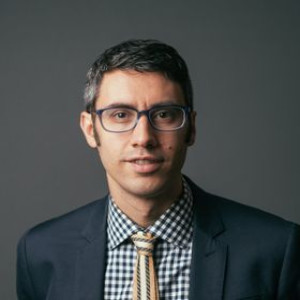
In this episode Michael is joined by Courtney Hammond Wagner to interview Meredith Niles. They spoke about Meredith's past life as a policy professional, her transition to the world of academia, her applied work on food systems and use of psychological theory. Also, Michael and Meredith shared their passion for open science resources!
Meredith's website: www.meredithtniles.com
Resources on open science:
Sherpa Romeo: http://sherpa.ac.uk/romeo/index.php
SPARC: https://sparcopen.org/
Apr 2, 2020
Apr 2, 2020
14 min
This insight clip is taken from episode 004 of the podcast with Jeremy Caradonna.
Jeremy holds a PhD in the history of scientific, environmental, and political thought, and teaches Environmental Studies and Human Dimensions of Climate Change at the University of Victoria. He is also the author of the book ‘Sustainability: A history’, published by Oxford University Press in 2014.
In the podcast we discuss:
- Indigenous versus modern notions of sustainable societies
- The rise of sustainability thinking in Europe
- Early links between environmental degradation and human wellbeing
- The link between economic thought and sustainability
Jeremy's website
https://www.jeremycaradonna.com/
Link to Jeremy's book 'Sustainability: A history'
https://global.oup.com/academic/product/sustainability-9780199372409?cc=de&lang=en&
Cool video summary of the book 'Sustainability: A history'
https://www.youtube.com/watch?v=hho1h7OR6l8
Finding Sustainability Podcast
@find_sust_pod
https://twitter.com/find_sust_pod
Environmental Social Science Network
https://twitter.com/ESS_Network
@ESS_Network
Mar 30, 2020
Mar 30, 2020
1 hr 7 min
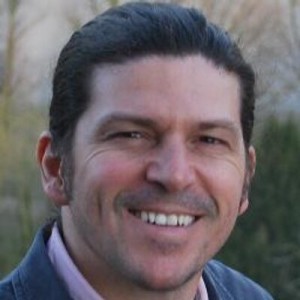
Michael Cox and Stefan Partelow interview Jose Luis Vivero-Pol.
Jose Luis is an engaged scholar associated with the Universities of Louvain, Cordoba, Edinburgh and the Spanish Right to Food Observatory. His research interests include food valuations (rights, commodity, public good, commons) and food systems in transition. In particular, how normative food narratives shape food policies, and collective arrangements in customary and contemporary food commons.
In the podcast we discuss the following topics:
- Current food narratives and policy implications
- The “food as a commons” framework
- Different schools of thought on commons
- Difference between water and food being framed as commons
- Influence of COVID19 on food systems
- What Ostrom’s school of thought can learn from reframing food as a commons
- Why interdisciplinarity is necessary but difficult to exercise
Jose’s Twitter
https://twitter.com/JoseLViveroPol?s=20
Jose’s articles, books and presentation referenced in the podcast:
https://www.mdpi.com/2071-1050/9/3/442
https://papers.ssrn.com/sol3/papers.cfm?abstract_id=2947219
https://www.researchgate.net/publication/332244503_Food_as_a_new_old_commons
Finding Sustainability Podcast
@find_sust_pod
https://twitter.com/find_sust_pod
Environmental Social Science Network
https://twitter.com/ESS_Network
@ESS_Network
Mar 26, 2020
Mar 26, 2020
13 min
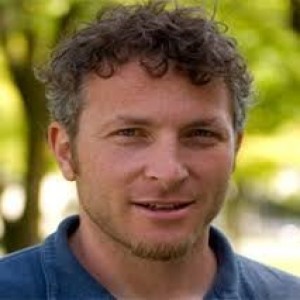
This insight clip is taken from Michael Cox’s interview with Mark Lubell in episode 023 of the podcast. In the clip, Mark talks about the ecology of games theory and its link to the history of research on polycentric governance.
Mark is a Professor in the Department of Environmental Science and Policy at the University of California, Davis, where he is also the Director of the Center for Environmental Policy and Behavior.
https://environmentalpolicy.ucdavis.edu/
https://environmentalpolicy.ucdavis.edu/people/lubell
Mark’s research focuses on human behavior and the role of governance institutions in solving collective action problems and facilitating cooperation. The collective action problems associated with environmental policy provide a laboratory for his research. Current projects include watershed management, environmental activism, agricultural best management practices, and institutional change in local governments. He also dabbles in experimental economics and simulation techniques to further explore collective action theory.
https://scholar.google.com/citations?user=MQiMFHIAAAAJ&hl=en&oi=ao
Finding Sustainability Podcast
@find_sust_pod
https://twitter.com/find_sust_pod
Environmental Social Science Network
https://twitter.com/ESS_Network
@ESS_Network

Mar 19, 2020
Mar 19, 2020
9 min
This Insight clip is taken from episode 011 of the podcast with Krister Andersson.
Krister Andersson is a Professor of Political Science at the University of Colorado, Boulder. His research focuses primarily on governmental reforms to address social and environmental problems in developing countries. He examines the politics of environmental governance and is interested in local institutional arrangements and the role they play in explaining policy outcomes.
Krister’s Google Scholar page
https://scholar.google.de/citations?user=PJ2c5_kAAAAJ&hl=de&oi=ao
University webpage
https://www.colorado.edu/polisci/people/faculty/krister-andersson
Finding Sustainability Podcast
@find_sust_pod
https://twitter.com/find_sust_pod
Environmental Social Science Network
https://twitter.com/ESS_Network
@ESS_Network

Mar 16, 2020
Mar 16, 2020
56 min
Ina Möller is a postdoctoral researcher in the Environmental Policy Group at Wageningen University in the Netherlands. Ina completed her PhD in the Department of Political Science at Lund University in Sweden, where her thesis was titled The Emergent Politics of Geoengineering. She also has a Master degree in Environmental Studies and Sustainability Science from Lund University, and a Bachelor degree in Political Science and Public Administration.
She currently works together with Prof. Aarti Gupta on anticipation, governance and transparency in the politics of climate change. Her principal focus has been on the case of climate engineering, which describes large-scale interventions into natural systems that are envisioned to stabilize global temperatures. She continues to study the reaction of actors throughout society as the idea of engineering the climate becomes more normalized in climate science.
Ina's university page
https://www.wur.nl/en/Persons/Ina-dr.-IM-Ina-Moller.htm
Ina’s ResearchGate page
https://www.researchgate.net/profile/Ina_Moeller
Finding Sustainability Podcast
@find_sust_pod
https://twitter.com/find_sust_pod
Environmental Social Science Network
https://twitter.com/ESS_Network
@ESS_Network
Mar 9, 2020
Mar 9, 2020
1 hr 26 min
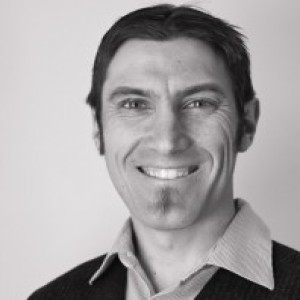
Steven Alexander is a Science Advisor based at Fisheries and Oceans Canada and holds an appointment as Adjunct Assistant Professor in the Faculty of Environment, University of Waterloo. Steven began working at the science-policy interface as a Mitacs Canadian Science Policy Fellow. Prior to this he was a Postdoctoral Research Fellow affiliated with both the National Socio-Environmental Synthesis Center in the US and the Stockholm Resilience Centre in Sweden. He calls himself an environmental social scientist, and his research focuses on community-based conservation and natural resource management, environmental governance, and the human dimensions of environmental change.
Steven’s Google Scholar
https://scholar.google.ca/citations?user=naPWaUwAAAAJ&hl=en
Steven’s twitter
https://twitter.com/salexander_11?lang=en
Steven’s ResearchGate profile
https://www.researchgate.net/profile/Steven_Alexander2
Qualitative data sharing paper published in Nature Sustainability
https://www.nature.com/articles/s41893-019-0434-8
Qualitative Data Sharing Resources:
https://www.sesync.org/for-you/cyberinfrastructure/research-and-tools/qualitative-data-initiative
Link to white paper from the Qualitative Data Initiative that was established at SESYNC:
Link to a webinar on qualitative data management as part of a broader Webinar series run by Data ONE
https://www.dataone.org/webinars/qualitative-data-management-interdisciplinary-research
Link to a webinar on social network analysis as part of a new series organized by Michael Schoon and the Programme on Ecosystem Change and Society’s (PECS) Collaborative Governance and Management Working Group

Mar 2, 2020
Mar 2, 2020
9 min
This Insight clip is taken from episode 009 of the podcast with Juan Camillo Cardenas.
Juan Camilo is a Professor of Economics at la Universidad de los Andes in Colombia. He is considered a leading expert in the field of experimental economics. His work is focused on the analysis and design of institutions (rules of the game) that promote cooperation among individuals and the solution of social dilemmas in the most fair, efficient, equitable, democratic and sustainable manners possible.
In the clip, Michael Cox is interviewing Juan Camilo on the role experimental economics games can play in teaching students.
Juan Camillo’s University page
https://economia.uniandes.edu.co/index.php?option=com_profesor&view=profesorp&profesor=9&Itemid=474
Jaun Camilo’s Google Scholar page
https://scholar.google.com.co/citations?user=yfeFFpIAAAAJ&hl=en
Finding Sustainability Podcast
@find_sust_pod
https://twitter.com/find_sust_pod
Environmental Social Science Network
https://twitter.com/ESS_Network
@ESS_Network