
115.3K
Downloads
246
Episodes
In Common explores the connections between humans, their environment and each other through stories told by scholars and practitioners. In-depth interviews and methods webinars explore interdisciplinary and transdisciplinary work on commons governance, conservation and development, social-ecological resilience, and sustainability.
Episodes
Mar 8, 2021
Mar 8, 2021
11 min
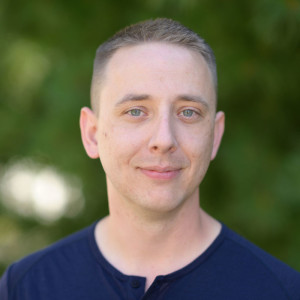
Today’s insight episode is from episode 043, Stefan’s interview with Kennith Wallen.
Kenny is an Assistant Professor of Human Dimensions of Fish and Wildlife at the University of Idaho. His professorship is a joint position with the Idaho Department of Fish and Game, so Kenny has one foot in academia and one in practice. He received his Ph.D. from Texas A&M University in the Human Dimensions of Natural Resources; his M.S. at Oklahoma State University in Zoology; B.A. at Truman State University in Psychology.
In the clip, Kenny explains the need for a platform that can help us better find like-minded researchers with similar interests for collaborating. Kenny is helping to develop and online platform, called the Conservation Social Sciences Community Network, which is now online. On the site you can sign-up for free and find others to collaborate with around the world.
Conservation Social Sciences Community Network map:
Sign-up:
Kenny’s lab website
https://www.human-element-lab.com/
Kenny’s Google Scholar page
https://twitter.com/incommonpod?lang=en
https://www.instagram.com/incommonpod/?hl=en

Mar 5, 2021
Mar 5, 2021
51 min
Stefan and Michael interview Erik Thulin, Jessica Blythe and Caroline Ferguson on topics related to the upcoming Fisheries and Aquaculture Commons virtual conference hosted by the IASC on March 9-12. This is the second episode in a series covering this year’s thematic conferences from the International Association for the Study of the Commons.
Erik Thulin is the applied behavioral science lead at Rare, and is directing the agenda for Center for Behavior and the Environment. He focuses on bridging the academic-practice gap through collaborations with research partners and environmental practitioners.
Jessica Blythe is an Assistant Professor at the Environmental Sustainability Research Centre at Brock University in Canada. Trained as a human geographer, Jessica’s research explores how various groups of people experience social-ecological change and what explains their differential capacities to respond.
Caroline Ferguson is a fourth year PhD student in the Emmett Interdisciplinary Program in Environment and Resources at Stanford University. Her current research investigates gender in Palau's sea cucumber fishery through an intersectional lens, as well as forced migration and climate adaptation in the Marshall Islands.
Conference website
https://2021fisheries.iasc-commons.org/
Erik Thulin
https://rare.org/person/erik-thulin/
[Cooperative Behavior Adoption Guide]
https://behavior.rare.org/wp-content/uploads/2020/01/Cooperative-Behavior-Adoption-Guide.pdf
Jessica Blythe
https://brocku.ca/esrc/jessica-blythe/
Caroline Ferguson
https://profiles.stanford.edu/caroline-ferguson
https://www.frontiersin.org/articles/10.3389/fmars.2021.625389/abstract
Feb 26, 2021
Feb 26, 2021
20 min
This episode is the first of our new Journal series.
Here our team will interview authors who have published in the International Journal of the Commons (IJC), asking them about their specific published paper, its purpose and future directions. The interviews wont simply summarize the articles, but aim to add additional insight into the author's intentions and reflections.
We won’t be interviewing authors from every published piece, but are partnering with the journal editors to develop a selection process. In the future, our ambition is to work with other community oriented journals that embody the values we put forward with this podcast and platform, and to conduct interviews with a wider diversity of authors.
In this first episode, Stefan Partelow and Michael Cox interview the editors of the International Journal of the Commons (IJC) about a recent editorial reviewing the state of the field of commons research and lay out their vision for addressing some of the gaps and challenges in the journal and community going forward. The three editors are Frank van Laerhoven, Micael Schoon and Sergio Villamayor-Tomas.
The editorial is titled: “Celebrating the 30th Anniversary of Ostrom’s Governing the Commons: Traditions and Trends in the Study of the Commons, Revisited”
Link to article:
https://www.thecommonsjournal.org/articles/10.5334/ijc.1030/

Feb 19, 2021
Feb 19, 2021
53 min
In this episode, Michael spoke with two organizers of an upcoming virtual conference being held by the International Association for the Study of the Commons (IASC). This conference is taking place February 24-26, and is the first in a series of virtual conferences being held by the IASC.
Conference website: https://2021space.iasc-commons.org/
IASC events website: https://iasc-commons.org/future-conferences/
Feb 15, 2021
Feb 15, 2021
1 hr 9 min
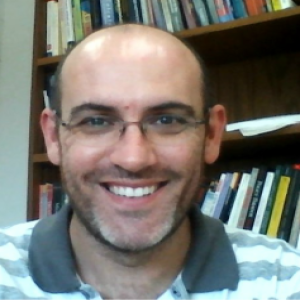
In this episode, Michael spoke with Ramiro Berardo, a professor in the School of Environment & Natural Resources at the Ohio State University. Ramiro discussed with Michael his research on natural resource governance using social network analysis (SNA), the diversity of resources that are now available for scholars trying to learn SNA, and the more recent trend towards social-ecological network analysis. Michael also asked Ramiro to talk about the extensive effort he has put in to his online teaching during the pandemic.
Ramiro's website: http://www.ramiroberardo.net/
Papers that Michael and Ramiro discuss:
Berardo, R., & Scholz, J. T. (2010). Self‐organizing policy networks: Risk, partner selection, and cooperation in estuaries. American Journal of Political Science, 54(3), 632-649.
Berardo, R., & Lubell, M. (2016). Understanding what shapes a polycentric governance system. Public Administration Review, 76(5), 738-751.
Feb 7, 2021
Feb 7, 2021
1 hr 7 min
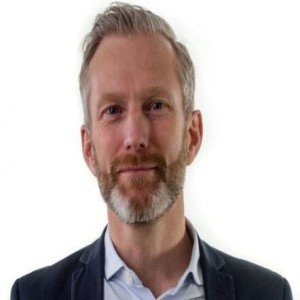
Stefan and Michael interview Henrik Österblom.
Henrik is the Science Director of the Stockholm Resilience Center and a Professor at the University of Stockholm in Sweden.
He has a PhD in Marine Ecology from the Department of Systems Ecology at Stockholm University, and a Master’s Degree in Behavioural Ecology from the Department of Zoology at Uppsala University.
He is interested in marine ecosystems and ways to improve ocean stewardship. Starting as a seabird ecologist, with a particular interest in social interactions between alcids, he has worked on understanding how the Baltic Sea is managed, how international collaboration emerged to address non-compliance in Southern Ocean fisheries, and how transnational corporations shape the present and future ocean. Ongoing work is focusing on the role of science in society and the cultural evolution of global prosocial behavior. He has worked at the Swedish Museum of Natural History, and as Special Advisor to the Swedish Government in the Secretariat for the Environmental Advisory Council.
Österblom has facilitated the Keystone Dialogues, a global co-production project including major private actors in global seafood, which has resulted in the establishment of the Seafood Business for Ocean Stewardship (SeaBOS) initiative, aimed to transform global seafood towards more sustainable practices. This project is funded by the Walton Family Foundation, the David and Lucile Packard Foundation, and the Gordon and Betty Moore Foundation. He is also principal investigator of project New solutions to marine problems, aimed at accelerating marine ecosystem knowledge through the use of autonomous drones and artificial intelligence and funded by the Marianne and Marcus Wallenberg Foundation.
Österblom is a member of the Expert Group for the High Level Panel for a Sustainable Ocean Economy and member of the IMBER Human Dimensions Working Group. He serves on the international advisory board of the South American Institute for Resilience and Sustainability Studies (SARAS²), as board member of Race for the Baltic, and as chairman of the SeaBOS Fundraising foundation. He is subject editor for Ecology and Society, and PLOS One.
Henrik’s SRC page
https://www.stockholmresilience.org/meet-our-team/staff/2008-01-09-osterblom.html
Seafood Business for Ocean Stewardship project
Unsustainable science (extended pdf also includes a Spanish version of the paper): https://www.cell.com/one-earth/fulltext/S2590-3322(19)30017-X?_returnURL=https%3A%2F%2Flinkinghub.elsevier.com%2Fretrieve%2Fpii%2FS259033221930017X%3Fshowall%3Dtrue
SARAS work on connecting science and art: https://www.ecologyandsociety.org/issues/view.php?sf=112
The keystone actor analysis: https://journals.plos.org/plosone/article?id=10.1371/journal.pone.0127533
Developing SeaBOS and its initial results:
https://www.pnas.org/content/114/34/9038
https://advances.sciencemag.org/content/7/3/eabc8041
Give us a rating on your podcast app!
https://twitter.com/InCommonPod
https://www.instagram.com/incommonpod/
https://www.patreon.com/incommonpodcast
Feb 1, 2021
Feb 1, 2021
21 min
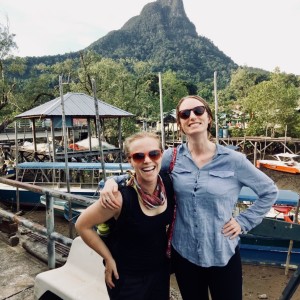
This ‘Insight’ clip is taken from full episode 026, Michael and Stefan’s conversation with Emily Darling and Georgina Gurney.
Emily is a Conservation Scientist with the Wildlife Conservation Society, and Georgina is a Senior Research Fellow at the Centre of Excellence for Coral Reef Studies at James Cook University.
In the clip, they both reflect on lessons learned from a transdisciplinary social-ecological coral reef monitoring project conducted in multiple countries.
Emily’s website: http://www.emilysdarling.com/
Georgina’s website: https://www.coralcoe.org.au/person/georgina-gurney
New paper led by Georgina: https://www.sciencedirect.com/science/article/pii/S000632071931420X
Smith Conservation Research Fellowship that Emily enrolled in: https://conbio.org/mini-sites/smith-fellows
SNAPP program website: https://snappartnership.net/
Data mermaid tool website: datamermaid.org
In Common Podcast
Twitter & Instagram @incommonpod
Patreon
https://www.patreon.com/incommonpodcast

Jan 29, 2021
Jan 29, 2021
10 min
This insight episode is taken from full episode 30, Stefan’s conversation with Ina Möller.
Ina Möller is a postdoctoral researcher in the environmental policy group at Wageningen University in the Netherlands. Ina completed her PhD in the Department of Political Science at Lund University in Sweden, where her thesis was titled The Emergent Politics of Geoengineering. She also has a Master degree in Environmental Studies and Sustainability Science from Lund University, and a Bachelor degree in Political Science and Public Administration.
She currently works together with Prof. Aarti Gupta on anticipation, governance and transparency in the politics of climate change. Her principal focus has been on the case of climate engineering, which describes large-scale interventions into natural systems that are envisioned to stabilize global temperatures. She continues to study the reaction of actors throughout society as the idea of engineering the climate becomes more normalized in climate science.
https://www.wur.nl/en/Persons/Ina-dr.-IM-Ina-Moller.htm
https://www.researchgate.net/profile/Ina_Moeller
--------
https://www.patreon.com/incommonpodcast
Twitter & Instagram @incommonpod
Jan 25, 2021
Jan 25, 2021
1 hr 7 min
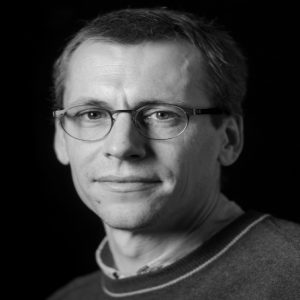
In this episode, Stefan interviews Joerg Niewoehner.
Joerg is a professor at the Humboldt University in Berlin, Germany, where he is also the director of the Integrative Research Institute on Transformations of Human-Environment Systems, with the acronym (IRI THESys). He holds a PhD in environmental sciences from the University of East Anglia. In 2004, he joined the Institute of European Ethnology at Humboldt University in Berlin to develop a collaborative program between Social Anthropology and the Life Sciences. He now holds a chair in Social Anthropology of Human-Environment Relations. He conducts ethnographic research at the intersection of science and technology studies, social anthropology and environmental sciences focusing particularly on the qualities of urbanisation, social-ecological change, and metabolic and market dynamics. He also serves on the board of the Georg Simmel Center for Metropolitan Studies.
In episode, we discuss how reflecting on theory of science can help position scholars towards understanding interdisciplinary challenges. We also discuss the challenges with inter- and trans-discipliarity, along with his perspectives on the challenges and paths forward. We touch on how the structural organization of universities and institutes balance traditional disciplinary orientation and more innovative forms of academic organization to foster interdisciplinarity. Joerg also talk about his future research interests in long social-ecological research with a focus on qualitative and quality change using qualitative data. For this he is interested in pushing forward innovative ways to archive qualitative data in social groups as living knowledge and archives rather than traditional digital repositories.
https://www.iri-thesys.org/
https://www.iri-thesys.org/people/niewoehner
https://scholar.google.de/citations?hl=en&user=PGZ0pdcAAAAJ&view_op=list_works&sortby=pubdate
---------
Follow us on Twitter and Instagram @incommonpod
Jan 18, 2021
Jan 18, 2021
44 min
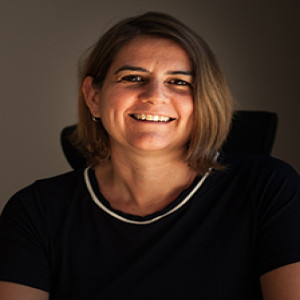
In this episode, Stefan interviews Emily Boyd, an in-person interview recorded back in January 2020.
Emily is Director of Lund University Centre for Sustainability Studies and Professor in Sustainability Science. She is a leading social scientist with a background in international development, environment and climate change, with a focus on the interdisciplinary nexus of poverty, livelihoods and resilience in relation to global environmental change. Emily is currently leading work on undesirable resilience, politics of loss and damage and intersectionality in societal transitions, including on transformations under climate change.
Emily Boyd is also an author for the IPCC, IPBES, and UKCCRA and is an Earth System Governance Senior Fellow.
https://www.lucsus.lu.se/emily-boyd
https://scholar.google.de/citations?user=CatOY9oAAAAJ&hl=de&oi=ao
In Common Podcast
If you enjoy this podcast, please give us a rating in Apple Podcasts, or your podcast app!
Twitter @incommonpod
Instagram @incommonpod
Support us on Patreon
https://www.patreon.com/incommonpodcast