
115.3K
Downloads
246
Episodes
In Common explores the connections between humans, their environment and each other through stories told by scholars and practitioners. In-depth interviews and methods webinars explore interdisciplinary and transdisciplinary work on commons governance, conservation and development, social-ecological resilience, and sustainability.
Episodes

Jan 11, 2021
Jan 11, 2021
58 min
In this episode Michael spoke with Brent Loken, a Global Food Lead Scientist at the World Wildlife Fund (WWF). Together they discussed Brent's realization that conservation ultimately needs to engage with how we meet peoples' needs, and that food is at the center of this. After describing the path he has taken leading up to his current position, Brent talked about his work at the WWF to promote a global transformation in our food system.
Brent's information:
Website: https://www.worldwildlife.org/experts/brent-loken
Twitter: @brentloken
Email: brent.loken@wwf.org
Link to a WWF project on Planet-based diets that Brent is involved in:
https://planetbaseddiets.panda.org/

Jan 4, 2021
Jan 4, 2021
15 min
This insight episode is from episode 006, Stefan’s interview with Sonya Graci.
Sonya Graci is an Associate Professor at the Ted Rogers School of Hospitality and Tourism Management at Ryerson, University in Toronto, Ontario. She is also the Director of the Hospitality and Tourism Research Institute. Sonya has worked on numerous projects around the world related to sustainable tourism development and has focused her attention on community capacity building in Honduras, Indonesia, Canada, Fiji and China. She has a keen interest in working with Aboriginal communities in developing sustainable forms of tourism. She also has a passion for increasing sustainability in marine environments and has focused much of her research on sustainable tourism development in island states. Sonya is the author of two books and several journal articles and industry publications.
Sonya's links
https://accommodatinggreen.com/
https://scholar.google.de/citations?user=GVQ1fy8AAAAJ&hl=en&oi=ao
Support us on Patreon
https://www.patreon.com/incommonpodcast
https://twitter.com/InCommonPod
https://www.instagram.com/InCommonPod/
Our website
Dec 28, 2020
Dec 28, 2020
1 hr 2 min
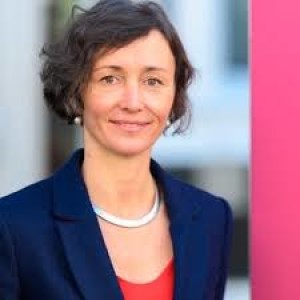
In this episode, Stefan interviews Anna-Katharina Hornidge. Anna is the Director of the German Development Institute in Bonn, Germany, one of the leading research institutions and think tanks for global development and international cooperation worldwide. She is also a Professor of Global Sustainable Development at the University of Bonn.
Anne refers to herself as a Development and Knowledge Sociologist with a focus on natural resource governance and sense-making, the social construction of knowledges and 'realities', as well as cultures of knowledge production and sharing. She is also an advocate of transformative science to advance inter- and transdisciplinary science cooperation.
In the episode, Anna tells us about her career and path into science leadership through Southeast Asian Studies, sociology, development and environmental governance research. We then discuss how she draws on a constructivist perspective, and how this can be applied to understand how and why knowledge is produced within the science system, and the implications this had on funding structures, outcomes and development politics. Anna also gives her take on making interdisciplinary research work in practice, and the challenges with pushing forward a transformative science agenda.
Anna’s homepage
https://www.die-gdi.de/en/anna-katharina-hornidge/
Anna’s twitter
https://twitter.com/AnnaK_Hornidge
German Development Institute twitter
Our website
Follow us on Twitter
https://twitter.com/InCommonPod?ref_src=twsrc%5Etfw
Follow us on Instagram
https://instagram.com/incommonpod
Support us on Patreon
Dec 26, 2020
Dec 26, 2020
1 hr 19 min
In this episode we talked about our favorite books of 2020, as well as some we want to read in 2021. The books we discussed are listed below in alphabetical order by title:
All We Can Save by Ayana Elizabeth Johnson and Katharine K. Wilkinson
Black Faces, White Spaces by Carolyn Finney
Braiding Sweetgrass by Robin Wall Kimmerer
Control of Nature by John McPhee
Do Androids Dream of Electric Sheep? by Philip K. Dick
Doughnut Economics by Kate Raworth
The End of the Myth by Greg Grandin
Erosion: Essays of Undoing by Terry Tempest Williams
Far-fetched Facts by Richard Rottenburg
How to Change Your Mind by Michael Pollen
Invisible women by Caroline Criado Perez
Misbehaving: The Making of Behavioral Economics by Richard Thaler
Mirror and the Light by Hilary Mantel
Nudge by Richard Thaler and Cass Sunstein
On the Backs of Tortoises by Elizabeth Hennessy
The Overstory by Richard Powers
Parable of the Talents by Octavia Butler
The Paradoxes of Transparency by Doug Wilson
Range by David Epstein
Seeing Like a State by James Scott
Trick Mirror by Jia Tolentino
Unhinged by Daniel Carlat
Untamed by Glennon Doyle
Where the Crawdads Sing by Delia Owens
Dec 21, 2020
Dec 21, 2020
1 hr 4 min
Dec 18, 2020
Dec 18, 2020
14 min
This insight clip is from full episode 53, Michael and Courtney’s interview with Jacopo Baggio.
Jacopo is an assistant professor at the School of Politics, Security, and International Affairs at the University of Central Florida.
In this insight clip, Jacopo answers a few questions related to the need for multiple methods and the challenges associated with social science research.
Jacopo's website:
In Common website
Connect with us on Twitter
https://twitter.com/InCommonPod
Support us on Patreon
Dec 11, 2020
Dec 11, 2020
10 min
Today’s ‘Insight’ episode is from full episode 22, Stefan’s interview with Liz Carlisle.
Liz's UCSB page
https://www.es.ucsb.edu/people/faculty/lizcarlisle
In this clip, Liz explains how her music career has influenced her ethnographic research, with lessons we can all learn about being present.
Liz Carlisle is an Assistant Professor in the Environmental Studies Program at University of California, Santa Barbara, where her work focuses on fostering a more just and sustainable food system. She holds a Ph.D. in Geography from UC Berkeley and a B.A. in Folklore and Mythology from Harvard University, and she formerly served as Legislative Correspondent for Agriculture and Natural Resources in the Office of U.S. Senator Jon Tester. Recognized for her academic publishing with the Elsevier Atlas Award, which honors research with social impact, Liz has also written numerous pieces for general audience readers, in the New York Times, Los Angeles Times, Business Insider, and Stanford Social Innovation Review. She is the author of two books about transition to sustainable farming: Lentil Underground (winner of the 2016 Montana Book Award) and Grain by Grain, coauthored with farmer Bob Quinn.
Our website
https://www.incommonpodcast.org/
Connect with us on Twitter
https://twitter.com/InCommonPod
Support us on Patreon
Dec 7, 2020
Dec 7, 2020
59 min
This is the first episode of our new series titled ‘Commoning'. Stefan, Michael and Courtney are joined by Michael Schoon (ASU) to discuss the following questions:
What makes a good scientist?
How do we transparently communicate the limitations of our research, without undermining it’s perceived value for our peers, journals and the public?
Michael Schoon
https://sustainability.asu.edu/person/michael-schoon/
Similar to our Insight series, the ‘Commoning’ series will have its own numbering system for reference.
As we are aiming to expand the type of content we provide on the podcast, the Commoning series will provide informal discussions among our podcast team, and we will be inviting additional guests to join us. Topics for discussion on this series will be wide open. This may include current events, recent topics on research, teaching and practice, reflections on previous interviews, or simply, whatever comes up! We want to provide an episode series that is not focused specifically on a guest, but allows for an open conversation on a wide range of topics.
We are calling this the ‘Commoning’ series, as we believe the term embodies the core values we are trying to put forward with this podcast. Providing a space for open, fun, but also critical conversations for our listeners, to share ideas and knowledge that can contribute to our science community.

Dec 4, 2020
Dec 4, 2020
10 min
Today’s ‘Insight’ episode is from full episode 32, our interview with Meredith Niles.
Meredith is a multidisciplinary scientist working in socio-ecological and food systems. Currently she is an assistant professor in food systems and policy at the University of Vermont in the Department of Nutrition and Food Sciences.
In the clip, Courtney asks Meredith about her advocacy for open access publishing, why it is important, and resources for those looking for more information.
Meredith's website: www.meredithtniles.com
Resources on open science:
Sherpa Romeo: http://sherpa.ac.uk/romeo/index.php
SPARC: https://sparcopen.org/
Nov 30, 2020
Nov 30, 2020
1 hr 21 min
In this episode Michael and Stefan spoke with Xavier Basurto, Associate Professor of Sustainability Science at Duke University's Nicholas School of the Environment. We talked about the development of his career that led him to Duke, and a current project he is co-leading in collaboration with the FAO and WorldFish, a CGIAR research center, known as Illuminating Hidden Harvests. Based on a paper that Xavier recently co-authored, we also talked about the importance of pre- and post-harvest arrangements in fisheries, as well as the difference between the patron-client model and the cooperative model for resource management.
Xavier dedicated the interview to his two daughters, Sofia and Ghita.
Xavier's website: https://sites.nicholas.duke.edu/xavierbasurto/?_ga=2.23995258.11664891.1606752433-415164452.1605284574
Hidden harvests project page: https://www.worldfishcenter.org/hidden-harvests
Xavier's paper that we discuss:
Basurto, Xavier, Abigail Bennett, Emilie Lindkvist, and Maja Schlüter. 2020. “Governing the Commons beyond Harvesting: An Empirical Illustration from Fishing.” PloS One 15 (4): e0231575. https://doi.org/10.1371/journal.pone.0231575.