
115.3K
Downloads
246
Episodes
In Common explores the connections between humans, their environment and each other through stories told by scholars and practitioners. In-depth interviews and methods webinars explore interdisciplinary and transdisciplinary work on commons governance, conservation and development, social-ecological resilience, and sustainability.
Episodes

May 17, 2021
May 17, 2021
34 min
Stefan Partelow speaks with Elke Kellner and Andreas Thiel on topics related to polycentricity, linked to the upcoming International Association for the Study of the Commons virtual conference on Polycentricity May 17-19, 2021. You can find more information about the conference and other IASC events on their website iasc-commons.org/.
Polycentricity conference:
https://2021polycentricity.iasc-commons.org/
Elke Kellner is a postdoctoral researcher at the Swiss Federal Institute for Forest, Snow and Landscape Research in Switzerland.
https://www.wsl.ch/en/employees/kellner.html
Andreas Thiel is a professor of International Agricultural Policy and Environmental Governance at the University of Kassel in Germany.
May 10, 2021
May 10, 2021
47 min
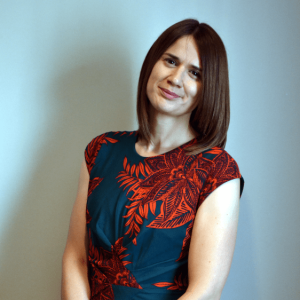
In today’s episode, Courtney and Stefan are speaking with Kimberley Peters.
Kim is a Professor Marine Governance at the Helmholtz Institute for Functional Marine Biodiversity (HIFMB), a research organisation in collaboration with the Alfred Wegener Institute (AWI) and University of Oldenburg (UOL), in Germany.
As a human geographer, she is interested in the social, cultural and political workings of the world around us. Her research group seeks to explore how governance does not just happen anywhere, but somewhere, and is shaped by spatial processes. Her work investigates how the geography of what we seek to govern, or do govern, is shaped by location, the character and qualities of place and relations with surrounding spaces.
In the episode, she reflects on how geography has dealt with and is influenced by its historical legacy, and how much of the current perspectives in human geography are critical because of that history. We also discuss her relationship to teaching and her students, working in an interdisciplinary institute, leaving your disciplinary comfort zone, and the research topics she is currently pursuing.
Kim has provided a list of references below regarding the history of geography for further information, as she notes that her perspectives are only one of many and not fully comprehensive. She encourages listeners to read the pieces below:
For a good overview of the history and 'turns' of geography see: Cresswell T (2013) Geographic Thought: A Critical Introduction. Wiley Blackwell: Oxford
On geography's relation with colonial and imperial practice: Driver F (1993) Geography Militant: Cultures of Exploration and Empire. Wiley Blackwell: Oxford.
On geography's relation with 20th Century German geopolitics: Klinke, I., & Bassin, M. (2018). Introduction: Lebensraum and its discontents. Journal of Historical Geography, 61, 53-58.
On closing Geography departments: Sacks B (2015) What happened to the American geography department? Geography Directions (online): https://blog.geographydirections.com/2015/04/08/what-happened-to-the-american-geography-department/
On decolonialism and geography: Esson, J., Noxolo, P., Baxter, R., Daley, P., & Byron, M. (2017). The 2017 RGS‐IBG chair's theme: Decolonising geographical knowledges, or reproducing coloniality?. Area, 49(3), 384-388
Your Human Geography Dissertation:
https://study.sagepub.com/yourhumangeography
Helmholtz Institute for Functional Marine Biodiversity:
Kim's Twitter
https://twitter.com/drkimpeters?lang=en

May 3, 2021
May 3, 2021
58 min
In today’s commoning episode we are talking about the Urban Commons in advance of the International Association for the Study of the Commons (IASC) virtual conference on this topic, which is happening May 6-8: https://2021urban.iasc-commons.org/
Michael spoke with three of the organizers of this conference: Hita Unnikrishnan from the University of Sheffield, Rimjhim Aggarwal from Arizona State University, and Harini Nagendra from Azim Premji University.
Apr 22, 2021
Apr 22, 2021
33 min
In today’s commoning episode we are talking about topics related to commoning and the Anthropocene, in advance of the International Association for the Study of the Commons (IASC) virtual conference on Commoning the Anthropocene. To do this, Stefan Partelow is talking with two organizers of the conference, Therese Lindahl and Jean-Denis Mathias, about the topics and organization of the conference as well as their own research, and of course interdisciplinarity and science cooperation.
https://2021anthropocene.iasc-commons.org/
Therese Lindahl is the program director for behavior, economics, and nature and the Beijer institute of ecological economics in Stockholm Sweden. She conducts research on collective action problems around shared natural resources, and investigates how local resource users perceive and respond to the increasingly challenging resource conditions that they are confronted with.
https://beijer.kva.se/people-beijer/therese-lindahl/
https://beijer.kva.se/programmes/ben/
Jean-Denis Mathias is research director at the National Research Institute for Agriculture, Food and the Environment in Clermont-Ferrand, France, and is part of the Complex System lab.
He has a background in physics and mechanics of material, and his current research deals with the dynamical modeling of social-ecological systems such as agent-based models and differential equations. Specifically, this work aims to understand the sustainable management and transitions of these systems for short-term and long-term benefits.
Apr 19, 2021
Apr 19, 2021
59 min
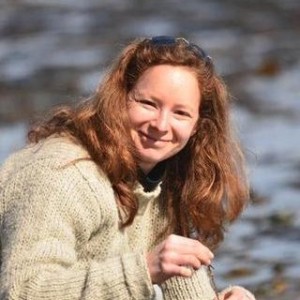
In this episode Michael spoke with Natalie Ban, a professor of environmental studies at the University of Victoria in British Columbia, Canada. Natalie spoke with Michael about her work with coastal indigenous communities in British Columbia, and the importance she places on engaging with her local partners in the right way, without imposing her own research questions or hypotheses, looking for windows of opportunity for her work, and trying to make sure that her work has local value. Natalie also described a distinction between two fundamentally different ways of viewing natural resource use: one that views use as extractive and detrimental, and the other which combines use with stewardship, as the indigenous communities that Natalie works with do.
Natalie's website: https://natalieban.wordpress.com/
Relevant articles by Natalie:
Ban, N. C., E. Wilson, and D. Neasloss. 2020. Historical and contemporary indigenous marine conservation strategies in the North Pacific. Conservation biology: the journal of the Society for Conservation Biology 34(1):5–14.
Ban, N., E. Wilson, and D. Neasloss. 2019. Strong historical and ongoing indigenous marine governance in the northeast Pacific Ocean: a case study of the Kitasoo/Xai’xais First Nation. Ecology and Society 24(4):10.
https://doi.org/10.5751/ES-11091-240410

Apr 12, 2021
Apr 12, 2021
27 min
Frank van Laerhoven and Stefan Partelow are speaking with Karen Bradshaw. Karen was a recent guest editor in a special issue of the International Journal of the Commons titled ‘Overlapping Resources and Mismatched Property Rights’ with her colleagues Billy Christmas and Dean Lueck. The special issue features 9 articles including and editorial led by guest editors.
https://www.thecommonsjournal.org/articles/10.5334/ijc.1070/
Karen Bradshaw is a Professor at Arizona State University in the Sandra Day O'Connor College of Law, and holds a joint position as a Senior Sustainability Scientist in Global Institute of Sustainability and Innovation. She researches governance of natural resources, with an emphasis on emerging regulatory approaches including certification regimes, public-private partnerships, and collaborative settlements. She is an expert on wildfire law and has also written about land development and forest management.
Karen's University page:
https://isearch.asu.edu/profile/2188921
https://twitter.com/km_bradshaw/
In Common Podcast
https://twitter.com/incommonpod?lang=en
Apr 5, 2021
Apr 5, 2021
1 hr 6 min
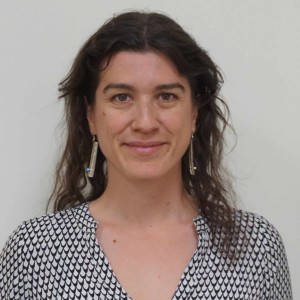
In this episode Michael spoke with Marta Berbes, a professor at the School for the Future of Innovation in Society at Arizona State University. During their conversation, Marta discussed her work on ecosystem service provision in several agricultural communities in Costa Rica and the importance of asking who gets what services, and why? Michael also asked Marta about her emphasis on participatory action research and her more recent work in South Phoenix on resilience and youth perspectives on green space.
Marta's website: https://sustainability-innovation.asu.edu/person/marta-berbes/
Marta's paper on ecosystem services in Costa Rica:
Berbés-Blázquez, M., M. J. Bunch, P. R. Mulvihill, G. D. Peterson, and B. van Wendel de Joode. 2017. Understanding how access shapes the transformation of ecosystem services to human well-being with an example from Costa Rica. Ecosystem Services 28:320–327.
Paper from Jesse Ribot and Nancy Peluso describing the theory of access that Marta mentions:
Ribot, J. C., and N. L. Peluso. 2009. A theory of access. Rural sociology 68(2):153–181
Mar 26, 2021
Mar 26, 2021
14 min
This insight episode is taken from full episode 058, Stefan's conversation with Anna-Katharina Hornidge.
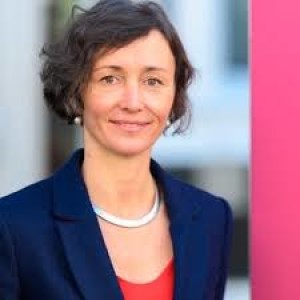
Anna is the Director of the German Development Institute in Bonn, Germany, one of the leading research institutions and think tanks for global development and international cooperation worldwide. She is also a Professor of Global Sustainable Development at the University of Bonn.
Anna refers to herself as a Development and Knowledge Sociologist with a focus on natural resource governance and sense-making, the social construction of knowledges and 'realities', as well as cultures of knowledge production and sharing. She is also an advocate of transformative science to advance inter- and transdisciplinary science cooperation.
In the clip, we explore Anna’s views on social constructivism, how it contrasts with other science perspectives, and how it is useful for understanding challenges at the science-policy interface.
Anna’s homepage
https://www.die-gdi.de/en/anna-katharina-hornidge/
Anna’s twitter
https://twitter.com/AnnaK_Hornidge
German Development Institute twitter
In Common Podcast

Mar 15, 2021
Mar 15, 2021
52 min
Mar 12, 2021
Mar 12, 2021
1 hr 7 min
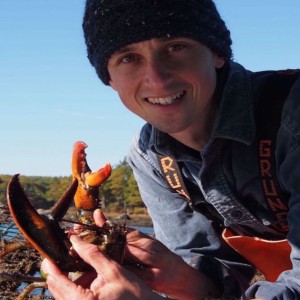
In this episode Michael spoke with Josh Stoll, an assistant professor of Marine Sciences at the University of Maine. Josh spoke with Michael about the trends in and relationship between wild catch fisheries and aquaculture in Maine. He also spoke about his professional identity, place attachment to Maine, and his oyster farm that he manages. Finally, they discussed the Local Catch Network that Josh co-founded to strengthen community-based fishing systems.
Links:
Josh's website: https://joshua-stoll.com/
Local catch website: https://localcatch.org/
References:
Stoll, J. S., H. M. Leslie, M. L. Britsch, and C. M. Cleaver. 2019. Evaluating aquaculture as a diversification strategy for Maine’s commercial fishing sector in the face of change. Marine Policy 107:103583.