

115.3K
Downloads
246
Episodes
In Common explores the connections between humans, their environment and each other through stories told by scholars and practitioners. In-depth interviews and methods webinars explore interdisciplinary and transdisciplinary work on commons governance, conservation and development, social-ecological resilience, and sustainability.
Episodes
Sep 13, 2021
Sep 13, 2021
59 min
This episode is the first of a six-episode miniseries we are hosting from the new Navigating Interdisciplinarity Podcast, produced by the Early Career Network of the International Association for the Study of the Commons (IASC-ECN).
Series hosts: Hita Unnikrishnan and Maria Gerullis
Facilitators: Dane Whittaker and Nusrat Molla
In the Navigating Interdisciplinarity Series the hosts will discuss challenges faced and opportunities provided by engaging in interdisciplinary and transdisciplinary work, particularly from the perspective of early career researchers.
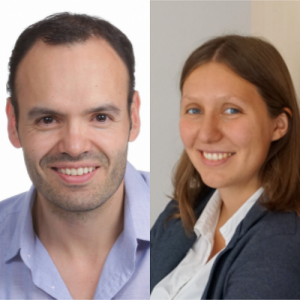
In this episode, Hita and Maria together with Dane Whittaker, PhD Student in the School of Sustainability at Arizona State University, were joined by Svenja Hippel, a Postdoctoral Researcher at the University of Wuerzburg and Juan Nicolas Hernandez, an Earth Institute Postdoctoral Research Fellow at Columbia University. We talked about Svenja and Nico’s journey towards interdisciplinary research, and then discussed building your research profile for the job market and how to answer the question “where do I fit?” We ended by hearing about some epic fails.
Svenja’s website: https://sites.google.com/view/svenjahippel
Nico’s website: https://www.jnicoha.com/
Dane’s website: https://sustainability.asu.edu/person/dane-whittaker/
Papers
Hernandez-Aguilera, J.N., Anderson, W., Bridges, A.L. et al. Supporting interdisciplinary careers for sustainability. Nat Sustain 4, 374–375 (2021). https://doi.org/10.1038/s41893-020-00679-y
Nicolas Hernandez-Aguilera. Coffee, hummus, and sustainability: What is the future of our careers? Supporting interdisciplinary career paths to solve sustainability crises. https://sustainabilitycommunity.springernature.com/posts/coffee-hummus-and-sustainability-what-is-the-future-of-our-careers-supporting-interdisciplinary-career-paths-to-solve-sustainability-crises?channel_id=behind-the-paper
Sep 6, 2021
Sep 6, 2021
57 min
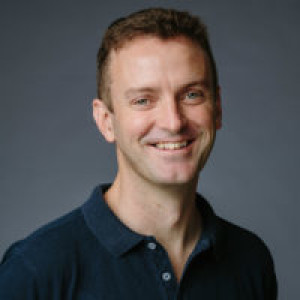
In this episode, Stefan spoke with Graeme Cumming. Graeme is a Professor at James Cook University in Townsville, Australia and the Director of the Australian Research Council (ARC) Centre of Excellence for Coral Reef Studies. Graeme has a wide range of interests centering around understanding spatial aspects of ecology and the relevance of scale in ecosystem and social-ecological system function and resilience. He is also interested in the applications of landscape ecology and complexity theory to conservation and the sustainable management of natural resources.
In the conversation, they discuss his extensive international experience, and the topics he has focused on throughout his career, including his upbringing in Zimbabwe. We discuss how theory is often lacking in applied research, and how building theory, particularly at the relevant scales, is an important challenge in his research program. We close the interview with his vision for examining what is beyond resilience, and the theoretical ideas he is interested in over the coming years.
Link to Post-Ostrom agenda paper:
https://www.sciencedirect.com/science/article/abs/pii/S1877343520300129
Link to scale mismatch on GBR paper:
https://www.sciencedirect.com/science/article/pii/S2590332220303511
University page
https://www.coralcoe.org.au/person/gscumming
Google Scholar page
Twitter: @incommonpod
Aug 30, 2021
Aug 30, 2021
1 hr 27 min
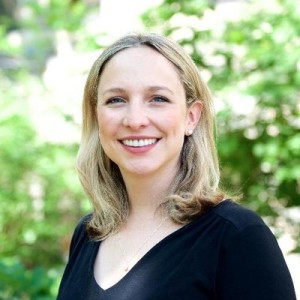
In this episode Michael spoke with Sara Meerow, an assistant professor at the School of Geographical Sciences and Urban Planning at Arizona State University. Sara is an interdisciplinary social-ecological systems scientist who focuses on urban geography and planning. Sara spoke with Michael about her work on the concept of urban resilience and on multifunctional green infrastructure projects, and the ways in which such projects often favor biophysical interventions to deal with stormwater-related sewage overflows, rather than broader environmental and social issues such as heat and pollution.
Sara's website: https://sgsup.asu.edu/sara-meerow
References:
Meerow, Sara, and Joshua P. Newell. 2019. “Urban Resilience for Whom, What, When, Where, and Why?” Urban Geography 40 (3): 309–29. https://doi.org/10.1080/02723638.2016.1206395.
Meerow, Sara. 2020. “The Politics of Multifunctional Green Infrastructure Planning in New York City.” Cities 100 (May): 102621. https://doi.org/10.1016/j.cities.2020.102621.
Aug 23, 2021
Aug 23, 2021
1 hr 9 min
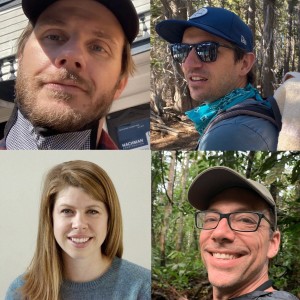
In this episode, Divya and Michael interview Tomas Koontz and Praneeta Mudaliar. Tomas Koontz is a Professor in the School of Interdisciplinary Arts and Sciences at the University of Washington. Praneeta is an Assistant Professor in the Department of Environmental Studies and Sciences at the Ithaca College. Tom was Divya's Ph.D. advisor, and Praneeta was her Ph.D. cohort, so doing this episode was also like a virtual reunion and served as an opportunity for Praneeta and Divya to reminisce and reflect on their journeys of navigating graduate school as international students in the United States, and Tom shared his experience of working with and mentoring international students.
Both Tom and Praneeta discussed their case studies on using polycentricity as a lens to study fisheries management in Lake Victoria (Praneeta) and collaborative governance of the socio-ecological systems in Puget Sound (Tom). Praneeta elaborated on how she used the concept of polycentricity to examine power dynamics in multi-level and multi-actor interactions in lake fisheries governance. Tom shared how the lens of polycentricity enabled him to examine multi-stakeholder collaboration in decision-making and collaborative governance among stakeholders across different scales. Together, both Tom and Praneeta reflected on ways science and scientific theories can inform practitioners in their decision-making process.
Praneeta's website: https://www.ithaca.edu/faculty/pmudliar
Tom's website: https://directory.tacoma.uw.edu/employee/koontz31
References:
1. Mudaliar, P. (2020). Polycentric to monocentric governance: Power dynamics in Lake Victoria's fisheries. Environmental Policy and Governance.
2. Mudaliar, P., & O'Brien, L. (2021). Crowding-out lower-level authorities: Interactions and transformations of higher and lower-level authorities in Kenya's polycentric fisheries. Environmental Science & Policy, 118, 27-35.
3. Koontz, T. M. (2021). Science and scale mismatch: Horizontal and vertical information sharing in the Puget Sound polycentric governance system. Journal of Environmental Management, 290, 112600.
4. Koontz, T. M. (2019). Cooperation in polycentric governance systems. Governing complexity: Analyzing and applying polycentricity, 115-132.
Aug 16, 2021
Aug 16, 2021
55 min
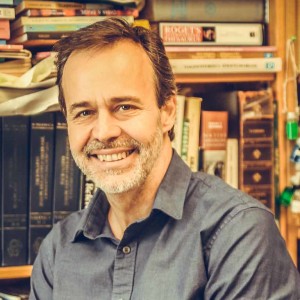
In this episode, Michael chatted with Eduardo Brondizio, a professor of anthropology at Indiana University in Bloomington, Indiana. Eduardo spoke to Michael about his research on land use and land cover change in the Brazilian amazon over several decades, as well as his work as the editor-in-chief of two major academic journals: Current Opinion in Environmental Sustainability and Global Environmental Change. They also talked about Eduardo's identity as an interdisciplinary anthropologist.
Eduardo's website: https://anthropology.indiana.edu/about/faculty/brondizio-eduardo.html

Aug 3, 2021
Aug 3, 2021
54 min

Jul 12, 2021
Jul 12, 2021
1 hr 2 min
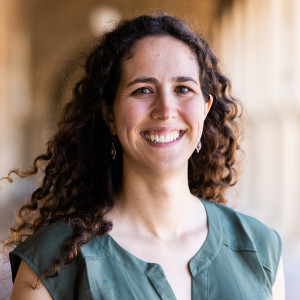
In this episode Michael is joined by a guest host, Karen Bieluch, a colleague of his at Dartmouth College. Karen led a conversation with her friend and colleague, Bridie McGreavy. Bridie is an Associate Professor in the Department of Communication and Journalism at the University of Maine, Orono. During the interview, Karen asked Bridie about her work studying the shellfish fisheries in Maine, with a focus on the ways in which communication affects collaborative freshwater conversation efforts.
Bridie's website: https://bmcgreavy.org/
Also check out: The Mudflat, a collaborative website of the Maine Shellfish Learning Network
Jun 28, 2021
Jun 28, 2021
1 hr 15 min
Michael and Courtney interviewed Nicola Ulibarri, an assistant professor in the department of urban planning and public policy at the University of California, Irvine. We talked about Nicola's work on collaborative governance and water management plans in the Central valley of California, where Nicola has been studying the ability of a variety of such plans to address climate change and social equity. We also highlighted one of the best figures we've seen depicting a groundwater-based social-ecological system! This is from the first reference listed below.
Nicola's website: https://faculty.sites.uci.edu/ulibarri/
References mentioned:
Ulibarri, Nicola, and Nataly Escobedo Garcia. 2020. “Comparing Complexity in Watershed Governance: The Case of California.” WATER 12 (3): 766.
Ulibarri, Nicola, Nataly Escobedo Garcia, Rebecca L. Nelson, Amanda E. Cravens, and Ryan J. McCarty. 2021. “Assessing the Feasibility of Managed Aquifer Recharge in California.” Water Resources Research 57 (3).
Jun 1, 2021
Jun 1, 2021
1 hr 21 min
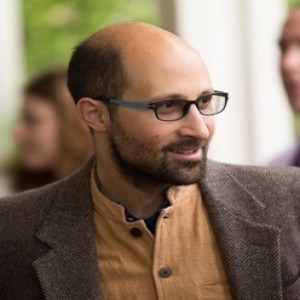
In this episode, Michael is joined by a new co-host of the podcast, Divya Gupta, to interview Forrest Fleischman, their friend and colleague currently working as a professor of forest resources at the University of Minnesota. Forrest talked to Michael and Divya about the two years he spent in India studying forest governance, his examination of joint forest management programs there, and his discovery that such projects seem to have often focused more on simplified metrics around tree planting and plantations than engaging with local communities. He also discussed his empirical examination of the policy known as forest landscape restoration, a supposedly transformative approach that generates win-wins for all involved. Forrest has become an important voice in this space, raising doubts about the ability of projects oriented primarily around tree plantings to solve local to global environmental issues.
Forrest's website: https://forestry.umn.edu/people/forrest-fleischman
References:
May 28, 2021
May 28, 2021
27 min
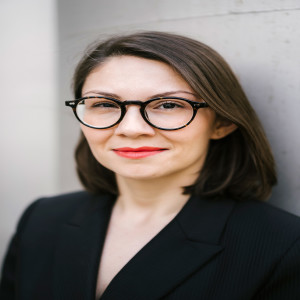
Maria Claudia Lopez and Frank van Laerhoven are speaking with Beril Ocaklı.
Beril co-authored a recent contribution to the International Journal of the Commons titled ‘Shades of Conflict in Kyrgyzstan: National Actor Perceptions and Behaviour in Mining’ with her colleagues Tobias Krueger and Jörg Niewöhner.
The episode starts with the proper pronunciation of Beril’s name, and wraps up with reflections on the importance of diversity in approaching the commons and commons scholarship. In between, the discussion gears around the article – the prequel, its message, and the sequel.
Beril Ocaklı is a doctoral researcher at IRI THESys. She holds a BA in International Economics from the Corvinus University of Budapest (2006) and a MSc in Development Studies from the London School of Economics and Political Sciences (LSE) (2007). She has a track record of leading international transdisciplinary cooperation projects on behalf of the German Federal Government, EU and other multinational organizations in resource governance in Eurasia.
- To find more details on Beril and her work, her profile page at IRI THESys is a good place to start;
- To get a taste of some of Beril’s unsalted opinions we suggest you look her up on Twitter;
- To hear Beril talk some more about the topic of gold mining in Kyrgyzstan go to The Global Extractivisms and Alternatives Initiative (EXALT) Podcast Talk March 2021 and the Voices on Central Asia for her recent interview on politics of gold mining.