
115.3K
Downloads
246
Episodes
In Common explores the connections between humans, their environment and each other through stories told by scholars and practitioners. In-depth interviews and methods webinars explore interdisciplinary and transdisciplinary work on commons governance, conservation and development, social-ecological resilience, and sustainability.
Episodes

Dec 7, 2021
Dec 7, 2021
53 min
In this episode, Hita and Nusrat Molla, were joined by Ramya Ravi, Ph.D scholar at Ashoka Trust for Research in Ecology and the Environment (ATREE), Bengaluru. We reflected on the previous episodes of this series through the perspective of early career scholars, and spoke a bit about reading across disciplines, challenging established ecological or social principles in interdisciplinary research, as well as finding our tribes. We ended the episode with a small discussion on the emotional burden of caregiving coupled with the precarity of academia and how informal collaborations and mentoring can help one to deal with difficult circumstances.
Ramya’s website: https://www.atree.org/users/ramya-ravi
Nov 29, 2021
Nov 29, 2021
1 hr 4 min
In this episode, Michael and Stefan spoke with Arun Agrawal, the Samuel Trask Dana Professor at the School for Environment and Sustainability at the University of Michigan. Arun has played an important role in the development of the Commons field and the study of the related subjects of conservation and development. They talked about Arun's path to an academic career, his thoughts about the history and current developments of the study of the Commons, and his thoughts on the categories and dichotomies that structure so much of our thinking in this field. They also talked about Arun's professional roles, including being editor-in-chief of World Development and the director of the International Forestry Resources and Institutions (IFRI) program.
Arun's website: http://www.arunagrawal.org/
References:
Agrawal, Arun. 2005. Environmentality: Technologies of Government and the Making of Subjects. Durham, NC: Duke University Press.
Ferraro, Paul J., and Arun Agrawal. 2021. “Synthesizing Evidence in Sustainability Science through Harmonized Experiments: Community Monitoring in Common Pool Resources.” Proceedings of the National Academy of Sciences of the United States of America 118 (29). https://doi.org/10.1073/pnas.2106489118.
Nov 22, 2021
Nov 22, 2021
1 hr 10 min
In this episode, Michael spoke with Courtney Carothers, a professor in the college of Fisheries and Oceans at the University of Alaska Fairbanks. They discussed Courtney’s work on "catch share", or individual transferable quota policies in fisheries, indigenous fisheries management systems, and the negative impacts that catch shares have often had on indigenous fishers. Catch shares are a dominant panacea being employed by the U.S. government to manage our shared fisheries resources, and a important critique of them discussed during the interview is the ways in which they prioritize efficiency and profit, lead to rights consolidation, and alienate local users from their traditional livelihoods. Courtney framed this process as being a symptomatic component of the broader processes of forced integration and colonization that has occurred in the U.S. and Canada. They also talked about how collaborative relationships can be built for transdisciplinary work.
References:
Carothers, Courtney, and Catherine Chambers. 2012. “Fisheries Privatization and the Remaking of Fishery Systems.” Environment and Society 3 (1). https://doi.org/10.3167/ares.2012.030104.
Donkersloot, Rachel, and Courtney Carothers. 2017. “Chapter 12 - Beyond Privatization: Rethinking Fisheries Stewardship and Conservation in the North Pacific.” In Conservation for the Anthropocene Ocean, edited by Phillip S. Levin and Melissa R. Poe, 253–70. Academic Press. https://doi.org/10.1016/B978-0-12-805375-1.00012-X.
Voo, Lee van der. 2016. The Fish Market: Inside the Big-Money Battle for the Ocean and Your Dinner Plate. St. Martin’s Publishing Group.
Media:
Talk by Dr. Leroy Little Bear on Indigenous Knowledge and Western Science:
Talks and videos posted by Dr. Seth Macinko: http://sethmacinko.com/videos
Talk by Jessica Black, Courtney Carothers, and Janessa Esquible on Indigenizing Fisheries: https://www.youtube.com/watch?v=448tr90KUWQ
Planet Money episode that Michael mentions: https://www.npr.org/sections/money/2015/11/04/454698093/episode-661-the-less-deadly-catch
Other links:
Survival denied report that Courtney mentions: http://allianceforajustsociety.org/wp-content/uploads/2013/03/Survival-Denied2.pdf
https://www.uaf.edu/ankn/publications/collective-works-of-angay/

Nov 16, 2021
Nov 16, 2021
53 min
In this episode, Stefan interviews Guido Caniglia.
Guido is the Scientific Director of the Konrad Lorenz Institute for Evolution and Cognition Research in Austria. Guido’s work aims to shape epistemological and theoretical frameworks that contribute to ongoing scientific developments. Guido has worked in different scientific fields, from evolutionary-developmental biology to sustainability science and higher education for sustainable development. In his research, Guido studies how experimental and theoretical practices contribute to produce evidence and knowledge about complex phenomena of transformation, from evolutionary transitions in the history of life (e.g. the evolution of social behaviors) to purposeful transformations towards sustainability in our contemporary world (e.g. socio-ecological and socio-technical innovations).
Guido previously held a Marie-Curie post-doctoral fellowship in the Faculty of Sustainability at Leuphana University of Lüneburg. He earned a PhD in Philosophy from the University of Florence (Italy) in 2010 while working in different academic communities mostly in Italy, Germany, Spain, and the United States. In January 2016 Guido obtained a second PhD, this time in Biology, from the Center for Biology and Society at Arizona State University (USA). From 2011 to January 2016 he also worked as Post-Doctoral researcher and project manager for the Global Classroom Project, a transnational partnership between Arizona State University and Leuphana University engaging in curriculum reform for higher education for sustainable development.
We talk about how to improve collaborative processes in science, and how to learn to collaborate while collaborating. We also discuss his perspectives on the types of knowledge needed to foster sustainability transformations, and how that knowledge would be best produced, also his perspectives on radical pluralism.
Guido’s Institute page
https://www.kli.ac.at/en/people/kli_team/view/244
KLI homepage
Guido’s Google Scholar profile
https://scholar.google.de/citations?user=NQUM-sMAAAAJ&hl=en&oi=ao
Freeth and Caniglia (2020) - Learning to collaborate while collaborating
https://link.springer.com/article/10.1007/s11625-019-00701-z
Caniglia, G., C. Luederitz, T. von Wirth, I. Fazey, B. Martín-López, K. Hondrila, A. König, H. von Wehrden, N. A. Schäpke, M. Laubichler, D. Lang, and D. J. Abson. 2020. A pluralistic and integrated approach to action-oriented knowledge for sustainability. Nature Sustainability.
Guido’s Twitter
Nov 8, 2021
Nov 8, 2021
1 hr 7 min
In this episode, Michael spoke with Derek Kauneckis, an associate professor at the Desert Research institute in Nevada. Derek spoke with Michael about his work on the waste commons as well as technological innovation, particularly with respect to water management. Throughout the program, Derek discussed the relevance of the commons literature in studying the complex, hyper-managed systems that he studies.
Derek's website: https://www.dri.edu/directory/derek-kauneckis/
Oct 18, 2021
Oct 18, 2021
58 min
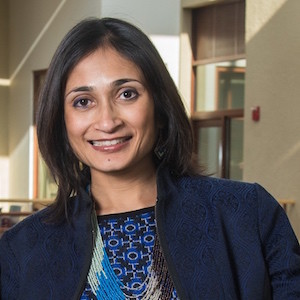
In this episode, Hita, Maria and Dane were joined by Malini Ranganathan, the Faculty Director of the Antiracist Research and Policy Center and an Associate Professor in the School of International Service at American University. We talked about her journey towards interdisciplinary research, and then discussed how aspects of positionality--like gender and race--influences interdisciplinary research. We ended by hearing about her epic fails.
Malini’s website: https://www.maliniranga.com/
References
Caldeira TP. Peripheral urbanization: Autoconstruction, transversal logics, and politics in cities of the global south. Environment and Planning D: Society and Space. 2017;35(1):3-20. doi:10.1177/0263775816658479
Said, Edward W. Culture and imperialism. Vintage, 2012.
Fraser, Nancy. "What's critical about critical theory? The case of Habermas and gender." New German critique 35 (1985): 97-131.
Oct 11, 2021
Oct 11, 2021
55 min
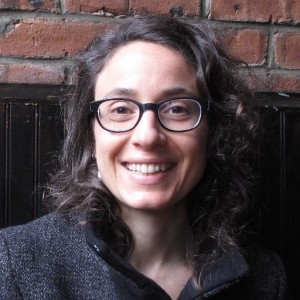
In this episode Michael spoke with Hillary Angelo, a professor of sociology at the University of California, Santa Cruz. Hillary is an historical sociologist who focuses on the relationship between the environment and large-scale transformations in urban contexts. They discussed Hillary's recent book "How Green Became Good: Urbanized Nature and the Making of Cities and Citizens."
Hillary's website: http://www.hillaryangelo.com/
Video that Michael mentions in the conversation: https://www.youtube.com/watch?v=Txg-bPHZBV4&t=2698s
Oct 4, 2021
Oct 4, 2021
1 hr 22 sec
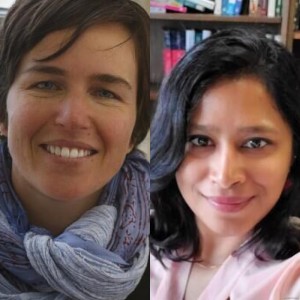
In this episode, Hita, Maria and Dane were joined by Georgina Cundill Kemp, Senior Program Specialist at the International Development Research Centre in Canada, and Praneeta Mudaliar, Assistant Professor of Environmental Studies and Science at Ithaca College. We talked about their journeys towards interdisciplinary research, then discussed building interdisciplinary collaborations and the role of trust in collaborative research. We ended by hearing about their epic fails.
Georgina’s website: https://scholar.google.com/citations?user=YlMUPQIAAAAJ&hl
Praneeta’s website: https://www.ithaca.edu/faculty/pmudliar
Sep 29, 2021
Sep 29, 2021
37 min
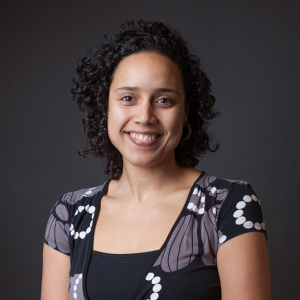
In this episode, Hita, Maria and Dane were joined by Nanda Wijermans, a Researcher at the Stockholm Resilience Centre. We talked about Nanda’s journey towards interdisciplinary research, and then discussed the unique opportunities and challenges of working in an interdisciplinary environment, and how to design effective interdisciplinary environments. We ended by hearing about an epic fail.
Nanda’s website: https://www.nandawijermans.nl/
Dane’s website:
Sep 21, 2021
Sep 21, 2021
41 min
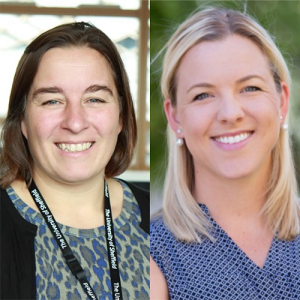
In this episode of the Navigating Interdisciplinarity series, Hita, Maria and Dane were joined by Vanesa Castán Broto, Professor of Climate Urbanism at the Urban Institute, The University of Sheffield; and Jennifer Vanos, Professor of Climate at Health at the School of Sustainability, Arizona State University. We talked about Jenni’s and Vanesa’s journey towards interdisciplinary research, and the idea of interdisciplinarity as an interplay of disciplinary institutions. We also touched upon balancing our passion for research with strategizing for career advancement, and ended with our guests sharing some of their epic fails in their academic journey.
Vanesa’s website: https://urbaninstitute.group.shef.ac.uk/who-we-are/prof-vanesa-castan-broto/
Jenni’s website:
https://sustainability.asu.edu/person/jennifer-vanos/
Dane’s website:
https://sustainability.asu.edu/person/dane-whittaker/
References:
Castán Broto, Vanesa, Maya Gislason, and Melf-Hinrich Ehlers. 2009. “Practising Interdisciplinarity in the Interplay between Disciplines: Experiences of Established Researchers.” Environmental Science & Policy 12 (7): 922–33. https://doi.org/10.1016/j.envsci.2009.04.005.
Vanos, Jennifer K., Ariane Middel, Michelle N. Poletti, and Nancy J. Selover. 2018. “Evaluating the Impact of Solar Radiation on Pediatric Heat Balance within Enclosed, Hot Vehicles.” Temperature (Austin, Tex.) 5 (3): 276–92. https://doi.org/10.1080/23328940.2018.1468205.
We also spoke about these other books and lectures
- Bogaard, Paul, ed. Harvard Lectures of Alfred North Whitehead: Philosophical Presuppositions of Science, 1924-1925. Edinburgh University Press, 2017.
- Kuhn, Thomas S. The structure of scientific revolutions. University of Chicago press, 2012.
- Halberstam, Judith, and Jack Halberstam. The queer art of failure. Duke University Press, 2011.
- Vatn, Arild. Institutions and the Environment. Edward Elgar Publishing, 2007.