
114.7K
Downloads
246
Episodes
In Common explores the connections between humans, their environment and each other through stories told by scholars and practitioners. In-depth interviews and methods webinars explore interdisciplinary and transdisciplinary work on commons governance, conservation and development, social-ecological resilience, and sustainability.
Episodes
Jan 22, 2024
Jan 22, 2024
58 min
This is the second in the Future Fisheries Management series that we are producing in collaboration with the Mercatus Center at George Mason University and the Center for Governance and Markets at the University of Pittsburgh.
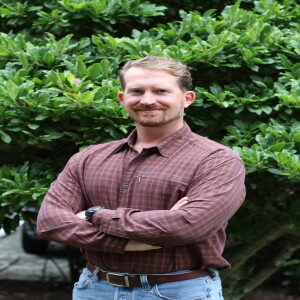
In this episode, Michael speaks with Bubba Cook, the Western and Central Pacific Tuna Programme Manager at the World Wildlife Fund, or WWF. Bubba’s career has included multiple phases. He obtained his law degree from Lewis and Clark Law School, working for the U.S. National Marine Fisheries Service in Alaska where he led a team in the implementation of of a catch share, also known as an individual transferable quota, program for the North Pacific crab fishery made famous by the TV show “Deadliest Catch.”
Bubba later joined WWf’s Arctic Programme to support fisheries conservation and management efforts across the Bering Sea from the Russian Far East to Alaska’s remote indigenous communities. In 2010, he joined the U.S. Peace Corps and servedin Fiji, where he supported several grassroots marine conservation projects over two years. Since 2012, Bubba has worked as the Western and Central Pacific Tuna Programme Manager for WWF out of Suva, Fiji, and Wellington, New Zealand, where he focuses on improving tuna fisheries management at a national and regional level in the Western and Central Pacific Ocean through policy improvements, market tools, and technological innovation.
Michael and Bubba discuss the lessons that Bubba has learned at each step along the way, and Michael asks him about the recent WTO fishing subsidies agreement that were a central focus of the workshop where they met.
Dec 31, 2023
Dec 31, 2023
42 min
In our final episode of 2023, Michael speaks with the editors of the International Journal of the Commons, which In Common has worked with for the past few years, producing podcast episodes based on articles published there.
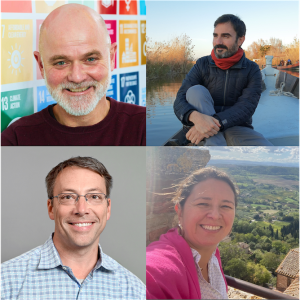
Today’s guests are Frank van Laerhoven, Associate Professor at the Copernicus Institute of Sustainable Development at Utrecht University in the Netherlands, Mike Schoon, Associate Professor in the School of Sustainability at Arizona State University, Sergio Villamayor-Tomas, Ramon y Cajal Senior Researcher at the Institute of Environmental Science and Technology in Barcelona, Spain, and the journal's new editor-in-chief, Maria Claudia lopez, Associate Professor in the Department of Community Sustainability at Michigan State University.
Michael and the IJC editors talk about the journal and its role in the commons research community, and how the editors think about issues such as journal impact factor, one of many metrics that seem to be exerting more and more influence over our professional lives and affecting how we think about ourselves individually and collectively. Frank describes his view of the journal as a means for community development, applying the same principles of the commons and commoning that many in the commons community use in their research activities. This is also how we view the role of the In Common Podcast. Thank you for listening to us this year. Feel free to reach out with feedback and suggestions for what you like like to hear moving forward. See you in 2024!
Dec 11, 2023
Dec 11, 2023
1 hr 1 min
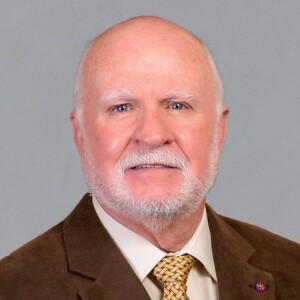
In this episode, Michael speaks with Billie Turner II, Regents Professor at the School of Sustainability at Arizona State University. Billie holds other positions as well, including Distinguished Global Futures Scientist at the Julie Ann Wrigley Global Futures Laboratory, also at Arizona State, member of the US National Academy of Sciences, and Associate Editor of the Proceedings of the National Academy of Sciences. Billie is a geographer and human-environmental scientist who studies land use and land cover change from prehistory to the present, and he has also contributed to our understanding of the determinants of social vulnerability and resilience. He works on deforestation, primarily in Mexico and Central America, and urban design in arid environments, especially the American Southwest.
Michael and Billie talk about two topics that Billie has written on, one being the reasons for the decline of a lowland Maya population around the years 800 to 1000, and the other being a long-standing debate between Thomas Malthus, who predicted that exponential population growth would inevitably outstrip linear growth in resources, and Esther Boserup, who argued that population-induced scarcity would motivate the necessary innovations to avoid systematic decline.
The interview concludes with a discussion of the book that Billie recently wrote, entitled: The Anthropocene, 101 Questions and Answers for Understanding the Human Impact on the Global Environment.
References:
Turner, B. L., and Jeremy A. Sabloff. 2012. “Classic Period Collapse of the Central Maya Lowlands: Insights about Human–environment Relationships for Sustainability.” Proceedings of the National Academy of Sciences 109 (35): 13908–14. https://doi.org/10.1073/pnas.1210106109.
Turner, B. L., and A. M. Ali. 1996. “Induced Intensification: Agricultural Change in Bangladesh with Implications for Malthus and Boserup.” Proceedings of the National Academy of Sciences of the United States of America 93 (25): 14984–91. https://doi.org/10.1073/pnas.93.25.14984.
Turner, B. L. 2022. The Anthropocene: 101 Questions and Answers for Understanding the Human Impact on the Global Environment. Agenda Publishing.
Dec 4, 2023
Dec 4, 2023
52 min
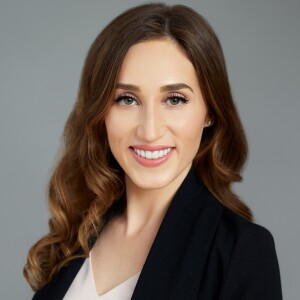
In this episode, Michael speaks with Victoria Bikowski, a PhD student in the Department of Politics at York University in Toronto, Canada, and a consultant for Suslop Incorporated, a consulting firm that specializes in sustainability and community development. The conversation primarily focuses on the main topic of Victoria’s PhD dissertation: the duty to consult, or the obligation held by provincial governments and the Federal Canadian Government to consult with indigenous peoples about the potential consequences of government-supported projects, such as natural resource development. Victoria’s primary question that she is addressing is about the effects that consultation processes have on the uncertainties that each of the groups involved faces. Victoria also talks about her role as a consultant for Suslop Incorporated, and how she navigates her dual role as an academic and a practitioner.

Nov 20, 2023
Nov 20, 2023
1 hr 5 min
This is the first episode in a new series on the Future of Fisheries Management (FFM), conducted in collaboration with the Mercatus Center at George Mason University as well as the Center for Governance and Markets at the University of Pittsburgh.
In this episode, Michael speaks with Elizabeth Mendenhall, Associate Professor of Marine Affairs at the University of Rhode Island. Elizabeth is an expert in international marine policy with a particular emphasis on the United Nations (UN) Convention on the Law of the Sea, or UNCLOS. During the conversation, she speaks with Michael about the origins of this policy, the elements of it that she admires, and the promise and challenges it presents for helping states deal with their shared environmental problems. At the end of the interview Michael and Elizabeth discuss the workshop on fisheries policy where they met, co-hosted by the Mercatus Center at George Mason University as well as the Center for Governance and Markets at the University of Pittsburgh.
Elizabeth’s website: http://www.elizabeth-mendenhall.com/
References:
Mendenhall, Elizabeth. 2023. “Making the Most of What We Already Have: Activating UNCLOS to Combat Marine Plastic Pollution.” Marine Policy 155 (September): 105786.
Mendenhall, Elizabeth, and Kahlil Hassanali. 2023. “The BBNJ Agreement and Liability.” Marine Policy 150 (April): 105549.
Mendenhall, Elizabeth, Cullen Hendrix, Elizabeth Nyman, Paige M. Roberts, John Robison Hoopes, James R. Watson, Vicky W. Y. Lam, and U. Rashid Sumaila. 2020. “Climate Change Increases the Risk of Fisheries Conflict.” Marine Policy 117 (July): 103954.
Mendenhall, Elizabeth, Rachel Tiller, and Elizabeth Nyman. 2023. “The Ship Has Reached the Shore: The Final Session of the ‘Biodiversity Beyond National Jurisdiction’ Negotiations.” Marine Policy 155 (105686): 105686.
Nov 13, 2023
Nov 13, 2023
1 hr 19 min
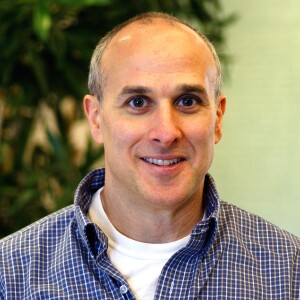
In this episode, Michael speaks with Eric Klopfer, the chair of the department of Comparative Media Studies and Writing at the Massachusetts Institute of Technology, or MIT. At MIT Eric is also the director of the Scheller Teacher Education program as well as the Education Arcade.
Eric is a leader in the space of game design for education. He recently co-authored a book on the subject: Resonant Games, Design Principles for Learning Games that Connect Hearts, Minds and the Everyday. During the conversation, Eric discusses games as an example of experiential learning and emphasizes the importance of combining a game exercise with reflection, which is where the real learning happens through what Eric calls an action-reflection cycle.
Eric and Michael also discuss the game that originally led Michael to speak to Eric: a simulation of the tragedy of the commons in a fishery, which Eric led the development of. In addition to this episode, Michael discusses his implementations of this game in a recent blog post on the In Common website. You can find more about this game and Eric's work at this web address:
Oct 27, 2023
Oct 27, 2023
16 min
This Insight Episode comes from full episode 111 with Dan Holland.
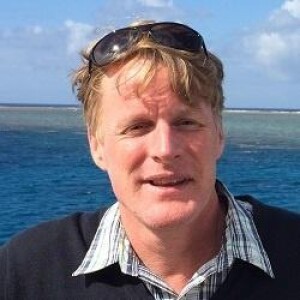
Dan is a senior scientist at the Northwest Fisheries Science Center within the US National Oceanic and Atmospheric Administration, more commonly known as NOAA. Dan is also an affiliate professor at the University of Washington, Chair of the Science and Statistical Committee of the Pacific Fishery Management Council, an associate editor of Marine Resource Economics, and a former President of the International Institute for Fisheries Economics and Trade (IIFET).
Dan talks with Michael about his work on risk pools, a form of collective-based management where fishers combine their quotas for species with the potential to constrain overall catch. They touch upon the pros and cons of this system as well as a few examples.
Dan’s website: https://www.fisheries.noaa.gov/contact/dan-s-holland-phd
References:
Holland, Daniel S. 2018. “Collective Rights–Based Fishery Management: A Path to Ecosystem-Based Fishery Management.” Annual Review of Resource Economics 10 (1): 469–85. https://doi.org/10.1146/annurev-resource-100517-023110.
Oct 7, 2023
Oct 7, 2023
12 min
This insight episode comes from full episode ninety-four with Dan Brockington.
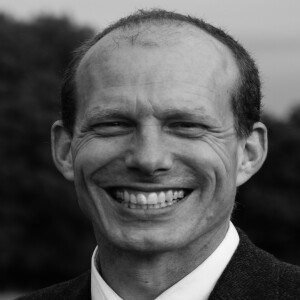
Dan is a professor and director of the Sheffield Institute for International Development at the University of Sheffield. Michael and Stefan talk with Dan about his book, Fortress Conservation: The Preservation of the Mkomazi Game Reserve, Tanzania, specifically looking at the myths that help to sustain nature reserves and the positive and negative implications of fortress conservation.
References:
Brockington, D. 2002. Fortress Conservation: The Preservation of the Mkomazi Game Reserve, Tanzania. Indiana University Press.
Brockington, D., Duffy, R., and Igoe, J. 2008. Nature Unbound: Conservation, Capitalism and the Future of Protected Areas. Routledge.
Brockington, D. 2009. Celebrity and the Environment: Fame, Wealth and Power in Conservation. Bloomsbury Publishing.
Oct 5, 2023
Oct 5, 2023
57 min
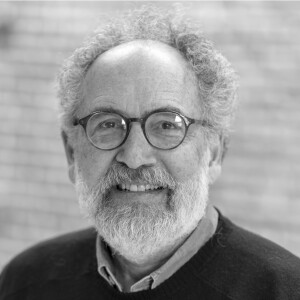
In this episode, Michael speaks with Peter Stein, a managing director at The Lyme Timber Company in Hanover, New Hampshire.
In addition to his current work, Peter has a long history of work in the land conservation movement. He was one of the founding staff of the Trust for Public Land, eventually becoming a senior vice president there. Michael and Peter discuss the history of the land trust movement and the challenging but still evolving relationship it has had with equity and community rights. Later on they talk about Peter’s role at Lyme Timber, which is what is known as a Timber Investment Management Organization, or TIMO. Peter described how his move there was at a fortunate time, given several important transitions that were occurring. First, there was a large divestment of paper products companies of their forest assets, creating organizations like Lyme Timber. And second, such organizations were increasingly using what are known as conservation easements, which constrain the development rights on a piece of land in exchange for some kind of subsidy.
Finally, Michael and Peter discuss the role that carbon markets and specifically carbon offsets are playing in the forest sector. Carbon offsets are a kind of payment for ecosystem service that are often integrated into the regulatory regime of a carbon market, but the voluntary offset space is now growing rapidly as well.
Sep 18, 2023
Sep 18, 2023
54 min
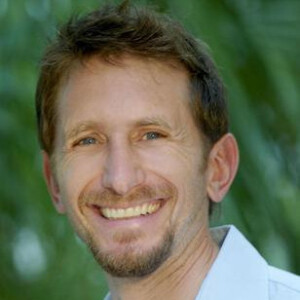
In this episode, Stefan speaks with Joshua Cinner.
Josh is a distinguished professor in the social sciences at James Cook University in Townsville, Australia, and is one of world's leading researchers on human-environment interactions in fisheries, marine conservation and coral reef systems. His research brings together a wide range of social science disciplines including human geography, common property, anthropology, and conservation policy. He often works closely with ecologists on interdisciplinary research topics. Increasingly, his research is moving beyond the case study approach toward a ‘big picture’ comparative exploration of human-environment interactions. This includes work with coastal peoples in the Pacific Islands, South East Asia, East Africa, and the Caribbean, to better understand how socioeconomic factors influence the ways in which people use, perceive, and govern coral reefs.
In our conversation, Josh explains his origin story connecting to marine systems, his research on coral bright spots and ambitions to continue large scale comparative analyses of human-nature interactions in fisheries. He also explains his approach to collaborative project design and implementation, and how he navigates the social networks of science and science management.
Josh’s JCU page
https://research.jcu.edu.au/portfolio/joshua.cinner/
Josh’s Google Scholar page
https://scholar.google.com/citations?user=pgldl5oAAAAJ&hl=en
Publication link: Bright spots on the world’s coral reefs
https://www.nature.com/articles/nature18607
Publications link: