
115.7K
Downloads
246
Episodes
In Common explores the connections between humans, their environment and each other through stories told by scholars and practitioners. In-depth interviews and methods webinars explore interdisciplinary and transdisciplinary work on commons governance, conservation and development, social-ecological resilience, and sustainability.
Episodes
Aug 17, 2020
Aug 17, 2020
1 hr 6 min
In this episode, Michael spoke with Beatriz Dos Santos Dias. Beatriz is a Postdoctoral Researcher at the School of Aquatic and Fishery Sciences at the University of Washington. She is a part of the project Modelling and Stock Assessment of Prince William Sound Herring (in the Gulf of Alaska), and as part of her research, she is investigating the drivers of herring spawn timing to improve our knowledge about the population and its stock assessment models. Michael and Bia spoke about her experiences leading up to and including her PhD work at the University of Massachusetts, Amherst, and her current project.
Link to Bia's paper that is discussed, "Opening the tap: Increased riverine connectivity strengthens marine food web pathways":
https://journals.plos.org/plosone/article?id=10.1371/journal.pone.0217008
Aug 11, 2020
Aug 11, 2020
49 min
In this episode Michael spoke with David Gill, an assistant professor at Duke University's Marine lab within the Nicholas School of the Environment. David and Michael spoke about David's past experiences in the NGO sector, his postdoc experiences through the Smith Fellowship and at the National Social-Ecological Synthesis Center (SESYNC), and his more recent research at Duke on the heterogeneous impacts that marine conservation initiatives have on local groups.
David's website: https://nicholas.duke.edu/people/faculty/gill
Paper on conservation impacts that David and Michael discuss:
Gill, David A., Samantha H. Cheng, Louise Glew, Ernest Aigner, Nathan J. Bennett, and Michael B. Mascia. 2019. Social Synergies, Tradeoffs, and Equity in Marine Conservation Impacts. Annual Review of Environment and Resources 44:347-372.
Aug 3, 2020
Aug 3, 2020
1 hr 24 min
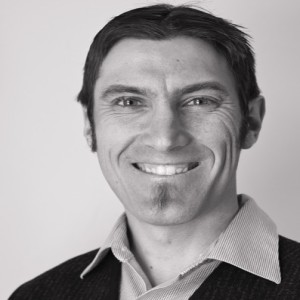
In this episode the whole FS team spoke with another group of podcasters from the Coastal Routes project (https://coastalroutes.org/). Together, Phil Loring, Hannah Harrison and Emily De Sousa run the Coastal Routes Radio “Social FISHtancing” pocast about Fisheries and COVID-19. They also produce "Pubcasts": abridged and annotated versions of scientific publications read by the authors. Each group discussed how their project got started, their process for creating episodes, how their podcasting fits into their broader professional lives, and the impacts that the project has had on the team members. Check them out!
Jul 27, 2020
Jul 27, 2020
18 min
This insight clip is taken from episode 029, Stefan and Michael's interview with Steven Alexander.
Steven is a Science Advisor based at Fisheries and Oceans Canada and holds an appointment as Adjunct Assistant Professor in the Faculty of Environment, University of Waterloo. Steven began working at the science-policy interface as a Mitacs Canadian Science Policy Fellow. Prior to this he was a Postdoctoral Research Fellow affiliated with both the National Socio-Environmental Synthesis Center in the US and the Stockholm Resilience Centre in Sweden. He calls himself an environmental social scientist, and his research focuses on community-based conservation and natural resource management, environmental governance, and the human dimensions of environmental change.
Steven’s Google Scholar
https://scholar.google.ca/citations?user=naPWaUwAAAAJ&hl=en
Steven’s twitter
https://twitter.com/salexander_11?lang=en
Steven’s ResearchGate profile
https://www.researchgate.net/profile/Steven_Alexander2
Qualitative data sharing paper published in Nature Sustainability
https://www.nature.com/articles/s41893-019-0434-8
Qualitative Data Sharing Resources:
https://www.sesync.org/for-you/cyberinfrastructure/research-and-tools/qualitative-data-initiative
Link to white paper from the Qualitative Data Initiative that was established at SESYNC:
Link to a webinar on qualitative data management as part of a broader Webinar series run by Data ONE
https://www.dataone.org/webinars/qualitative-data-management-interdisciplinary-research
Link to a webinar on social network analysis as part of a new series organized by Michael Schoon and the Programme on Ecosystem Change and Society’s (PECS) Collaborative Governance and Management Working Group
Finding Sustainability Podcast
@find_sust_pod
Environmental Social Science Network
https://twitter.com/ESS_Network
@ESS_Network

Jul 20, 2020
Jul 20, 2020
51 min
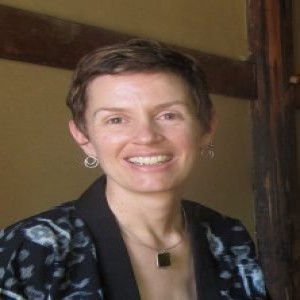
In this episode, Stefan interviews Irina Rafliana.
Irina is a science communication officer at the Indonesian Institute of Sciences (LIPI), and is also currently a PhD candidate at the German Development Institute in Bonn, Germany. Irina’s research is focused on disaster sociology, where she is examining the social construction of knowledge and technology in the implementation of a tsunami warning system in Indonesia aided by German partners. Irina has extensive experience working within the Indonesian science system, but also internationally.
In the podcast we discuss disaster risk in Indonesia around earthquakes and tsunamis, and the challenges surrounding the implementation of a tsunami warning system. Irina is studying the sociology of this process, how knowledge is constructed among the individual and organization involved, as well as the challenges with communicating this knowledge with local communities in Indonesia.
Indonesian Institute of Sciences (LIPI)
Germany Development Institute, Bonn, Germany
Finding Sustainability Podcast
@find_sust_pod
https://twitter.com/find_sust_pod
Environmental Social Science Network
https://twitter.com/ESS_Network
@ESS_Network
Jul 13, 2020
Jul 13, 2020
1 hr 7 min
In this episode Michael spoke with Jacqui Bauer. Jacqui is the founder and CEO of Rentlab (https://www.rentlab.org/), an organization that works with cities to address the "split incentive problem" created by dividing the rights and responsibilities of tenants and landlords with respect to rental property. Michael and Jacqui discussed this project and Jacqui's previous work that led up to it, particularly her position as the sustainability director for the city of Bloomington, Indiana. Not coincidentally, Bloomington is where Michael attended Indiana University for graduate school. They talked a bit about their time there, as well as about their thoughts on the public vs. private sectors and how academia relates to each.
Finally, since the topic of the best pizza (at least in Bloomington and maybe the world) didn't come up, here is the website for Mother Bear's pizza: https://motherbearspizza.com/

Jul 5, 2020
Jul 5, 2020
1 hr 5 min
In this episode Michael spoke with John Parker. John is a sociologist of science and a program director at the National Science Foundation (NSF) within its division of social and economic sciences. John and Michael spoke about John's experience at the NSF and the importance of mentorship and accumulative advantage in science, which challenge the way we think about "who is good" in a field, and how we judge this as a forced decision. John also discussed his work on "coherent groups" such as the Resilience Alliance (https://www.resalliance.org/), which he has studied at length. Finally, John and Michael discussed the too-often invisible work done by many people to support the outcomes that a much smaller number of individuals receive credit for. The implications of this work are far-reaching for all scientists as we struggle with the challenges of self-reinforcing power and privilege, increasing inequalities, and the collective-action problems we face when we try to produce public goods.
John's website and google scholar pages:
http://john-parker-wg6d.squarespace.com/
https://scholar.google.com/citations?user=euuurksAAAAJ&hl=en
Jun 29, 2020
Jun 29, 2020
1 hr 10 min
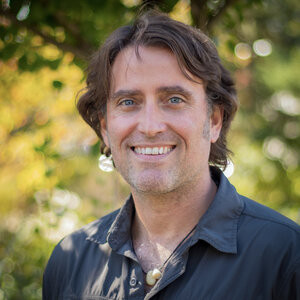
In this episode, Michael spoke with Phil Loring. Phil is an associate professor in the geography department at the University of Guelph, as well as the Arrell Chair in Food, Policy and Society at the Arrell Food Institute, also at the University of Guelph. Michael and Phil discussed several projects that Phil is working on, including on upcoming book, Finding Our Niche, the importance of threshold concepts in sustainability studies, and Coastal Routes Radio, a collaborative podcast that Phil is leading along with others in his group. In a future episode of FS, we will speak again with Phil and the rest of the Coast Routes team!
Show notes:
Phil's website: http://www.conservationofchange.org/phil-loring
Twitter handle: @conservechange
Phil's paper on thresholds: https://www.facetsjournal.com/doi/10.1139/facets-2019-0037
Coastal Routes radio website: https://coastalroutes.org/
You can find information on Phil's upcoming book here: https://fernwoodpublishing.ca/book/finding-our-niche

Jun 15, 2020
Jun 15, 2020
9 min
This insight episode is taken from episode 028 of the podcast, Stefan and Michael's interview with Fiona Nunan.
Fiona Nunan is a Professor of Environment and Development within the International Development Department at the University of Birmingham in the UK.
https://www.birmingham.ac.uk/staff/profiles/gov/nunan-fiona.aspx#staffdetails
https://twitter.com/fionanunan?lang=en
Her interests and experience focus on natural resource governance and management in developing country settings, particularly within inland fisheries and coastal locations in East and Southern Africa, and on exploring the links between poverty and the environment.
She was appointed to Head of the department in 2014 and was previously the Director of Postgraduate Research. She leads on the new Environment, Sustainability and Politics pathway of the MSc program, and works closely with colleagues in the Political Science and International Studies Department.
Fiona’s Google Scholar page
https://scholar.google.de/citations?user=gjUJQYcAAAAJ&hl=de&oi=ao
Her first book was published in 2015 by Routledge, titled: 'Understanding Poverty and the Environment: Analytical Frameworks and Approaches'. The book makes an innovative contribution to literature on environment and development by bringing together a diverse range of analytical approaches and frameworks that can be used to study human-nature interactions.Her second book, which we discuss in detail in the podcast, was published at the beginning of this year 2020 by Routledge, titled “Governing Renewable Natural Resources: theories and frameworks”.
Link to book ‘Governing Renewable Resources’
Link to book ‘Poverty and the Environment’
Finding Sustainability Podcast
@find_sust_pod
https://twitter.com/find_sust_pod
Environmental Social Science Network
https://twitter.com/ESS_Network
@ESS_Network
Jun 8, 2020
Jun 8, 2020
1 hr 9 min
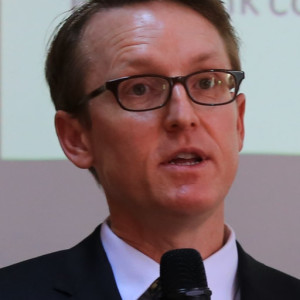
Michael spoke with Chris Weible, a professor at the school of public affairs, University of Colorado, Denver. Chris is also the director of his school's PhD program, and a co-director with Tanya Heikkila of the Workshop on Policy Process Research (WOPPR).
Chris is a leading figure on the field of policy studies, and Michael and Chris discussed the use of a popular policy process tool, the advocacy coalition framework, as well is Chris' developing interdisciplinary work on the role of emotions and interpretivist perspectives in policy process studies.
Chris' website: https://publicaffairs.ucdenver.edu/programs/public-affairs-programs/phd-in-public-affairs/christopher-weible-ucd189
WOPPR website: https://publicaffairs.ucdenver.edu/research-and-impact/workshop-on-policy-process-research
Paper that Chris mentions towards the end of the interview: Durnová, A. P., and C. M. Weible. 2020. Tempest in a teapot? Toward new collaborations between mainstream policy process studies and interpretive policy studies. Policy sciences.